
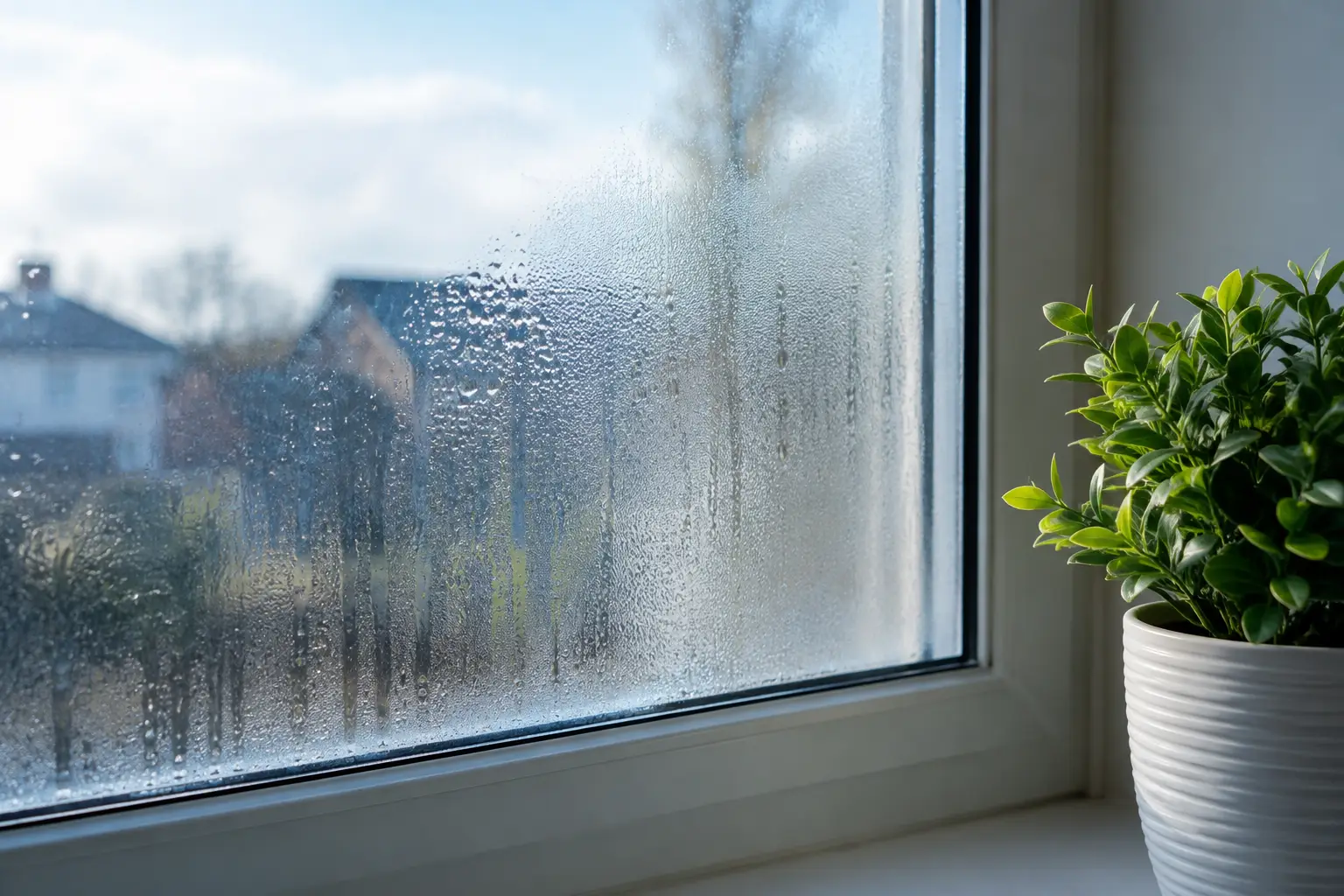
A clear window can turn cloudy overnight, particularly after a cold Kent evening or a busy morning of showers and breakfast. If you are asking, why do windows mist up, the answer depends on where the moisture is sitting. Condensation on the room side is usually linked to everyday humidity and ventilation. Moisture trapped between double-glazed panes is a different matter and can point to a failed sealed unit.
Knowing the difference helps you deal with the right problem. It can also prevent unnecessary replacement work, or stop a small ventilation issue becoming damage to paintwork, curtains and timber surrounds.
Why do windows mist up inside your home?
Air naturally holds water vapour. Cooking, showering, washing clothes, drying laundry and even breathing all add moisture to the air inside a property. Warm air can hold more moisture than cold air, so when humid indoor air touches a cold window pane, it cools quickly and releases water droplets. This is condensation.
Older single glazing is especially prone to this because the glass becomes very cold. Double glazing reduces the effect by creating an insulating gap between panes, but it cannot remove all condensation if the room is humid, poorly ventilated or allowed to become very cold.
You may notice misting most often in bedrooms first thing in the morning, on kitchen windows while cooking, or in bathrooms after a shower. A little light condensation in these conditions is common. Pools of water on the sill, dripping glass or black mould around the frame are signs that the balance of heat, ventilation and moisture needs attention.
The home, not always the window, is the cause
It is easy to assume that any condensation means the windows have failed. Often, the window is simply the coldest visible surface in the room, so it shows you that there is too much moisture in the air. The same moisture may also be settling on external walls, behind wardrobes and in cold corners where it is less obvious.
Modern homes can make this more noticeable. Draught-proofing, insulation and replacement windows make a house more energy efficient, but they also reduce the natural air leakage found in older properties. That is good for warmth and heating bills, provided fresh-air ventilation is still used properly.
Practical ways to reduce internal condensation
The aim is not to make your home cold or draughty. It is to remove moist air where it is produced and keep internal surfaces at a more even temperature.
Use extractor fans when cooking and bathing, and leave them running for a sensible period afterwards if they have an overrun setting. Keep kitchen and bathroom doors closed during these activities so damp air does not travel through the house. If an extractor is noisy, weak or does not clear steam, it may need cleaning, repairing or replacing.
Where fitted, trickle vents in uPVC window frames should generally be left open, particularly during colder months. They provide controlled background ventilation without needing to leave a window wide open. Opening windows for a short time each day can also help, although this needs to be balanced with security, weather and heat loss.
Drying washing indoors is a major source of moisture. A vented tumble dryer should discharge outdoors, while a condenser dryer needs a well-ventilated room. If clothes have to dry on an airer, place it in a room with an open trickle vent or window and keep the door shut. A dehumidifier can be useful in the short term, especially during wet weather, but it should support good ventilation rather than replace it.
Consistent background heating also makes a difference. Letting rooms become very cold then heating them intensely can encourage condensation on chilled glass and walls. A steady, moderate temperature is usually more effective and more comfortable.
Condensation between double-glazed panes
Misting inside the glass unit, between the two panes, is not caused by shower steam or drying clothes. It normally means that the perimeter seal around the double-glazed unit has broken down. The insulating gap has lost its airtight seal, allowing moisture into the space between the panes.
This is often described as a blown window or failed double-glazed unit. You may see a permanent haze, droplets that cannot be wiped from either side, or staining around the edge of the glass. The view through the window becomes unclear, and the unit will not perform as well thermally as it should.
The good news is that a misted unit does not always mean the complete window frame needs replacing. If the uPVC frame, opening mechanism, hinges and locks are sound, it may be possible to replace the glass unit only. This is usually a more cost-effective repair and retains a frame that is still doing its job.
A full replacement may be the better option where the frame is warped, damaged, difficult to lock, badly discoloured or from an older system with poor thermal performance. A professional inspection should look at the whole window rather than treating every misted pane in the same way.
What about mist on the outside of windows?
Condensation on the outside pane of a double-glazed window can be surprising, but it is usually a positive sign. High-performing A-rated glazing keeps heat inside the property so effectively that the external pane remains cold. On a clear, damp morning, moisture in the outside air can then condense on it.
This type of mist normally clears as the day warms up. Unlike condensation on the inside, it does not point to excess moisture in your rooms. It can be a sign that the glazing is insulating well.
When window condensation needs prompt attention
Wipe down internal condensation when you see it, including the sill and lower frame, to prevent standing water. Persistent damp should not be ignored, particularly around timber finishes, plasterboard or wallpaper. Over time, it can lead to mould growth, damaged decorations and an unhealthy-feeling room.
If mould is already present, clean it safely with an appropriate product and address the underlying moisture source. Simply painting over staining will not solve the problem. Check that air bricks are not blocked, extractor fans are working, gutters are not overflowing near the wall, and any obvious leaks are investigated.
You should arrange an assessment if condensation has suddenly become much worse, if you can see water between glazed panes, or if windows are difficult to open and close. In some homes, the issue is a combination of ageing glazing, poor extraction and cold spots around the building envelope. Looking at each part together gives the most reliable result.
For homeowners in Maidstone and the wider South East, ADM Home Improvements can assess failed glazing and advise whether a replacement sealed unit or new A-rated uPVC window is the sensible route. The focus should be on a clear explanation, a tidy installation and a solution that suits the condition of the property.
A clearer, drier home starts with the right diagnosis
Windows mist up because moisture has met a colder surface, but the location of that mist tells the real story. Manage humidity and ventilation when condensation is on the room side; investigate the sealed unit when it is trapped between panes; and do not worry if a high-performance window occasionally mists on the outside. A few careful checks now can protect both your view and your home for years to come.