
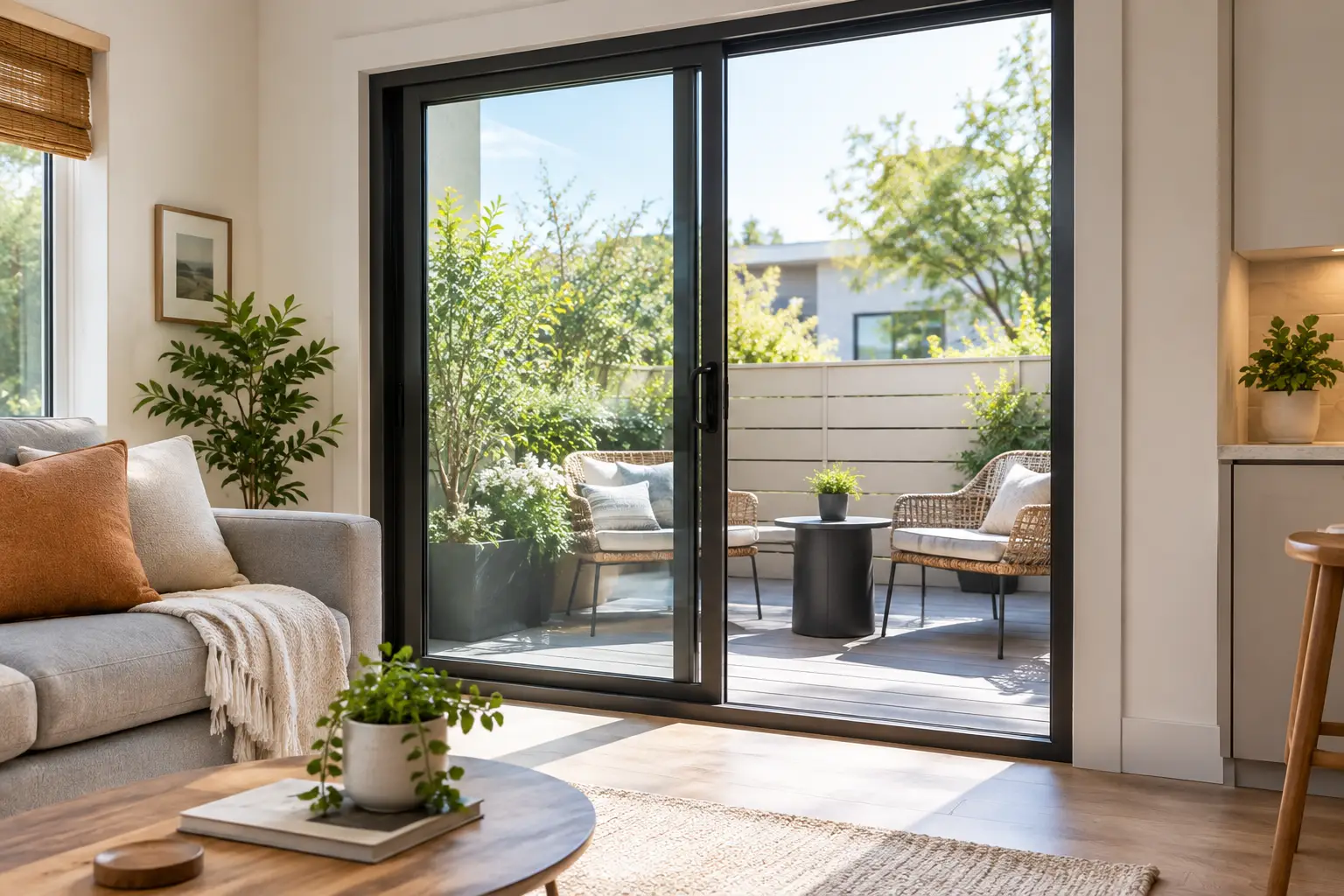
A cramped dining area, a narrow kitchen extension or a compact conservatory does not have to mean settling for a small, dark doorway to the garden. The right patio doors for small spaces can bring in valuable daylight, improve the view outside and make everyday access to the patio feel far less restrictive. The key is choosing a style that suits the room as well as the opening.
For many homes across Maidstone and the wider South East, the best answer is not necessarily the largest possible door. It is the door that opens in the right direction, keeps clear floor space where it is needed and performs properly through a British winter. Sightlines, threshold details, glazing and furniture layout all deserve the same attention as the frame colour.
Start with the space around the opening
Measure more than the structural opening. Think about the room immediately inside it. A door that looks excellent on a drawing can become awkward if it conflicts with a dining table, kitchen island, radiator or the route to the garden.
In a compact room, ask three practical questions. Where will people stand while opening the door? Is there space for a leaf to swing in or out? And will the door create a pinch point when furniture is in place? These details often determine whether sliding, French or bifolding doors are the sensible choice.
The garden side matters too. A door that opens outwards may preserve indoor floor area, but it needs a clear patio. If there is a raised step, narrow path or frequently used seating area outside, the swing of the door should be planned carefully. A site visit is useful here, as levels and drainage around the threshold can affect the finished result.
Sliding patio doors for small spaces
Sliding patio doors are often the most space-efficient option for a tight room. Because the panels move along a track rather than swinging into the room or garden, they do not claim any usable floor space. This makes them particularly suitable for compact lounges, galley kitchen extensions and smaller conservatories.
They also provide broad glazed panels and an uninterrupted view when closed. That can make a modest room feel more connected to the garden, especially where the patio or lawn is visible from the main seating area. Modern uPVC sliding doors offer strong thermal performance, secure multi-point locking and a choice of frame finishes to complement the property.
There is a trade-off. With a standard two-panel sliding door, only around half of the overall opening is available at one time. For most households, this is more than enough for day-to-day use. However, if the opening is regularly used for bringing garden furniture through, entertaining or creating a fully open connection in summer, a different configuration may suit better.
Sliding doors are a particularly practical choice where a sofa, dining set or kitchen units need to sit close to the rear wall. Nothing swings across the room, so the layout remains flexible.
Consider the frame and glass proportion
On a small elevation, bulky frames can make the opening look heavier than it needs to. Slimmer-profile systems and well-proportioned panels can maximise glass area without compromising security or weather performance. The goal is not simply more glass, but a balanced door that suits the scale and character of the property.
Glazing choice also affects comfort. Energy-efficient double glazing helps reduce heat loss, while toughened safety glass is normally required in doors and low-level glazing. Where a room gets strong afternoon sun, suitable solar-control glass may be worth discussing, as a compact extension can warm up quickly in summer.
French doors when you want a full opening
French doors remain a popular choice for smaller openings because they can provide a wide, clear route outdoors when both leaves are open. They work well from a dining room, traditional kitchen or conservatory where the opening is not especially wide but access matters.
For a small room, outward-opening French doors are usually the better arrangement. They keep the interior clear and allow furniture to be positioned closer to the opening. Inward-opening doors can work where the patio is too restricted, but they need enough internal clearance to avoid knocking chairs, tables or cabinets.
French doors can also suit period homes and properties where a more traditional appearance is preferred. They bring a sense of symmetry that some homeowners favour over the large panes of a sliding door. With quality uPVC frames, secure locks and A-rated glazing, they can offer modern performance without losing that familiar look.
The compromise is the clearance needed outside. If your patio is very shallow, outward-opening leaves may cut across the usable seating area. In that situation, a sliding door may be the more convenient long-term choice.
Are bifolding doors right for a compact room?
Bifolding doors can create an impressive open corner or wide garden-facing wall, but they are not automatically the best patio doors for small spaces. When open, the panels stack neatly to one or both sides, giving a larger unobstructed opening than a typical sliding door. This is excellent for a kitchen-diner that opens directly onto a level patio.
However, the folded panels still need somewhere to stack, and a compact room may not gain much from an opening that is far wider than its furniture layout can support. Bifolds also have more frame lines when closed than large sliding panes, which can affect the view from inside.
They are most effective where there is enough width for several panels and a clear outside area for the doors to open. If the available opening is narrow, or the aim is simply to gain light without moving furniture, a well-designed sliding door will often be the more proportionate investment.
That does not make bifolds unsuitable for every small extension. Where the room is used mainly for cooking and entertaining, and the garden floor is level with the internal floor, they can make a compact space feel much more generous during warmer months. It depends on how the room is actually used, not just the dimensions on plan.
Thresholds, access and weather protection
A low threshold can make a noticeable difference to a smaller room, particularly where the patio doors are used frequently by children, older relatives or anyone with reduced mobility. It creates a cleaner transition to the garden and reduces the visual interruption at floor level.
The detail has to be installed correctly. Threshold height, drainage and external paving levels must work together to prevent water tracking towards the property. This is especially important on exposed rear elevations or where the patio falls towards the house. A low threshold should never come at the expense of reliable weather protection.
Security should be built into the decision as well. Look for strong frames, quality handles, multi-point locking and toughened safety glazing where required. Large glass areas can feel vulnerable to some homeowners, but a professionally specified and fitted door system provides both visibility and reassurance.
Make a small room feel larger after installation
The door is only part of the result. Keeping the sightline to the garden clear has a real effect on how spacious the room feels. Avoid placing tall furniture immediately beside the opening, and consider flooring that continues visually towards the patio to strengthen the connection between inside and out.
Lighter frame finishes can help a compact room feel open, while anthracite grey or black frames can give a sharper, contemporary contrast where there is sufficient natural light. There is no single right colour. A cottage-style property, modern extension and traditional bay-fronted home each call for a different balance.
Curtains and blinds should be planned early too. Recesses, tracks and handles all need enough clearance. For sliding doors, vertical blinds, roller blinds or fitted systems can be practical. For French and bifold doors, make sure the window covering does not obstruct the handles or opening action.
Choose the door around your everyday use
A patio door should make the room easier to live with every day, not just look good on the first sunny afternoon. Sliding doors are often ideal where floor space is limited. French doors offer a traditional appearance and a full clear opening from a modest aperture. Bifolds can be a strong choice when a wider opening and a level, usable patio justify them.
At ADM Home Improvements, we take the time to look at the opening, the room layout and the finish you want before recommending a solution. High-quality workmanship and careful fitting are just as important as the door style itself.
A well-chosen patio door does more than lead outside. It gives a smaller room more light, a better view and a more comfortable way to enjoy the garden throughout the year.