
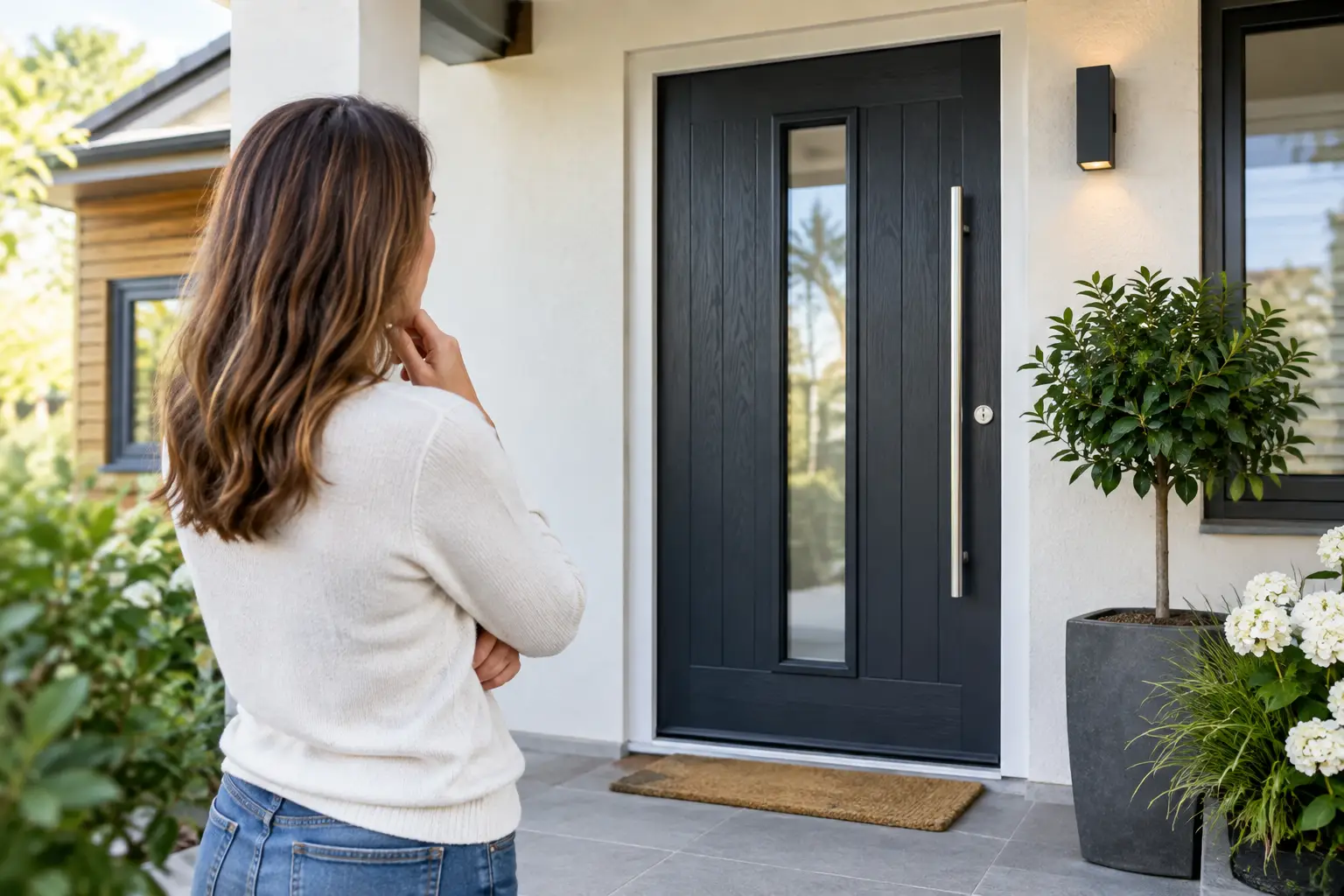
A front door is one of the first things you and your visitors see, but it also has a far more practical job to do. When considering how to choose a composite door, the right answer is not simply the colour or design that catches your eye. It is the door that suits your property, feels secure every time it closes and continues to perform through years of South East weather.
Composite doors are a popular choice for homes across Maidstone, Kent and the wider South East because they combine a traditional appearance with modern construction. They can suit anything from a period cottage to a newer family home, provided the specification is chosen carefully.
Start with the way your door needs to work
Before looking at colours, consider where the door will be fitted and how your household uses it. A front entrance usually needs to make a strong visual impression while providing high levels of security. A rear or side entrance may need more privacy, practical glazing or a style that coordinates with patio doors and windows.
Think about the amount of natural light in the hallway too. A solid door offers maximum privacy, while glazed panels can make a dark entrance feel brighter. If the door faces a busy road or public footpath, obscure or decorative glass may provide a better balance between light and privacy than clear glazing.
It is also worth considering the exposure of the property. A door on an open driveway, coastal-facing location or particularly windy elevation needs to be correctly fitted and sealed to withstand regular rain and wind. Good installation matters as much as the door itself. Even a quality product will not perform as it should if the frame, threshold and surrounding finish are poorly installed.
How to choose a composite door style
The best style is usually one that looks as though it belongs to the house. A door does not need to copy every neighbouring property, but it should work with the age, brickwork, window style and overall character of your home.
For a more traditional property, panelled designs with a woodgrain finish often provide the right look. Heritage colours such as black, green, blue, red or cream can work particularly well, depending on the exterior of the house. For contemporary homes, simpler lines, flush finishes and restrained glazing patterns often create a cleaner result.
Take time to view colour samples in daylight. A shade that looks smart in a brochure or showroom can look quite different against your brickwork, render or uPVC windows. Darker colours can create a striking entrance but may show dust and marks more readily. Lighter shades can feel fresh and welcoming, although they may need more regular cleaning in a high-traffic area.
The inside of the door deserves attention as well. Many homeowners focus entirely on the exterior, then find that the internal finish does not work with their hall, flooring or staircase. Choosing an internal colour that complements the space can make the entrance feel more considered.
Choose glazing for light, privacy and character
Glazing can transform the appearance of a composite door, but it should be selected for practical reasons as well as style. Decorative glass can give a traditional door more personality, while a modern vertical glazed panel can suit a contemporary entrance.
Obscure glass is a sensible choice where privacy is important. It allows daylight into the hall without providing a clear view inside. If you want a brighter entrance but are concerned about security, ask about toughened or laminated glass options and the locking arrangement around the glazed area.
Side panels and fanlights can be useful where the entrance opening is wider or taller than a standard door. They can make the frontage feel more balanced and bring in additional light. However, more glazing is not always the best choice for every home. A narrow, exposed entrance may benefit from a simpler, more solid design.
Put security at the centre of the decision
A composite door should feel substantial, close firmly and provide dependable protection for your home. Look beyond the appearance of the slab and ask about the complete system: the door, frame, hinges, cylinder, locks, handles and glazing all play a part.
A quality composite door typically has a strong core and reinforced frame, helping it resist everyday knocks as well as attempted forced entry. Multi-point locking systems secure the door at several points around the frame rather than relying on a single central lock. The cylinder should also be selected with security in mind, particularly if it is exposed on the outside of the property.
Hardware is not just a finishing touch. A letterplate, handle or knocker should be solid, well-fitted and suited to the door colour. Chrome, black, gold and antique finishes can all look effective, but choose one that fits the style of the home rather than following a short-lived trend. If the door includes a spyhole, chain or smart-access feature, make sure everyone in the household will find it practical to use.
Ask your installer what security standards the door and locking system meet, and whether the proposed specification is appropriate for your location and insurance requirements. Clear answers at quotation stage are a good sign that the details have been properly considered.
Check energy efficiency and weather performance
Replacing an older timber or uPVC door can make a noticeable difference to comfort around the entrance hall. A well-made composite door helps reduce draughts and heat loss, particularly when paired with a correctly fitted frame and effective seals.
Check the door's energy rating or U-value, but avoid treating one figure as the whole story. The glass specification, threshold and installation quality affect real-world performance. A low threshold can improve access for pushchairs, wheelchairs or anyone with reduced mobility, though it needs to be designed and fitted correctly to maintain weather resistance.
If you are replacing windows at the same time, consider the complete look and performance of the elevation. Coordinating the frame colour, glazing style and hardware can improve kerb appeal and avoid the patchwork appearance that sometimes occurs when upgrades are carried out years apart.
Do not overlook size, opening direction and access
A door must work comfortably in the space around it. Check whether it should open inwards or outwards, which side the hinges need to be on and whether it could clash with a radiator, stairs, hallway furniture or an external gate.
Standard sizes are suitable for many homes, but older properties and altered entrances often need a made-to-measure solution. Accurate surveying is essential where the opening is uneven, the threshold has settled or there are existing side panels. This is not a detail to estimate from a quick measurement with a tape measure.
For family homes, wider openings can make daily life easier when carrying shopping, moving furniture or managing prams. On the other hand, a very large door may not suit a small frontage. The proportion between the entrance, surrounding brickwork and window positions matters.
Compare quotations like-for-like
The cheapest quotation is not always the best value, especially when the differences are hidden in the specification. Before deciding, make sure you understand what is included: the exact door design and colour, frame, glass, hardware, locks, thresholds, removal of the old door, fitting, trims and disposal.
It is sensible to ask who will carry out the survey and installation, how long the work is expected to take and what guarantees are provided. A local, experienced team should be happy to explain the process in plain English rather than pressuring you into a quick decision.
Photographs and samples are useful, but seeing the door range in person can make choosing easier. You can judge the texture, weight, hardware finish and glazing detail properly, rather than relying on a screen image.
A door that feels right every day
The right composite door should make the entrance to your home feel warmer, safer and more welcoming, without creating extra maintenance or compromise. Focus on the combination of style, security, energy performance and careful fitting, then choose a design you will still be pleased to come home to in years to come.
For homeowners who would like practical advice and a free, no-obligation quotation, ADM Home Improvements can help specify and fit a composite door with the same friendly attention to detail given to every home-improvement project.