
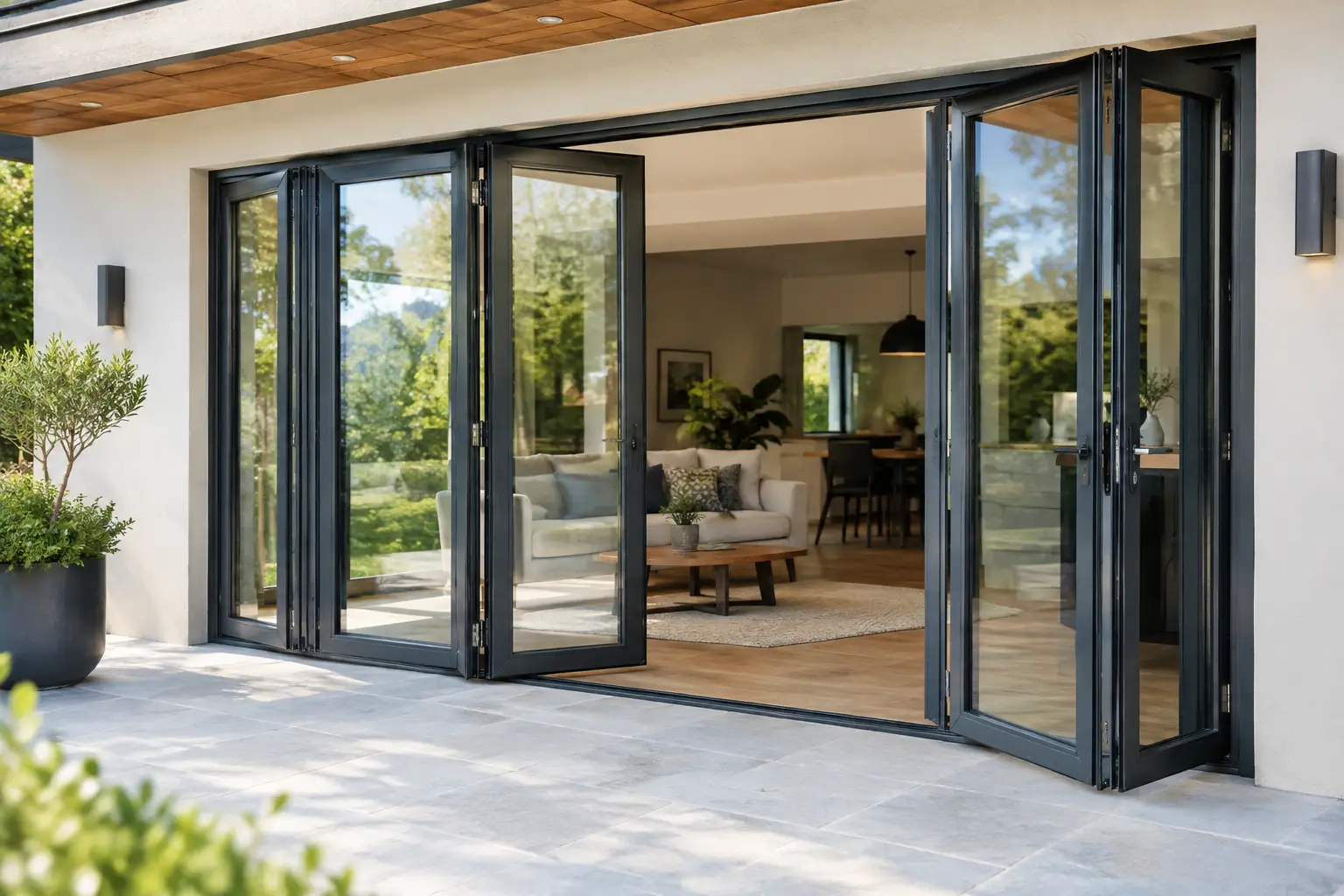
A fully opened bifold door can make a kitchen extension feel connected to the garden. It can also make some homeowners pause before they choose one: how secure are bifold doors, particularly when much of the rear wall is glass?
The short answer is that a well-made, correctly fitted bifold door can be very secure. Modern systems are designed with multi-point locking, strengthened frames, toughened or laminated glazing and security hardware that protects the panels when they are closed. The longer answer is that security depends on the door specification and installation quality, not simply on whether the door folds.
For homes across Maidstone and the wider South East, bifolds are often fitted at the back of a property, opening onto a garden, patio or conservatory. That location makes sensible security choices especially worthwhile. A cheaper system with basic locks and poor fitting can create weaknesses. A quality system, installed with care, should provide strong everyday protection without taking away from the light and open views that make bifolds so popular.
How secure are bifold doors compared with patio doors?
Bifold doors do have more moving sections than a single hinged door, so their security needs careful design. However, more panels do not automatically mean less security. When locked, the panels are held together and secured back to the frame, creating a closed, rigid barrier rather than a row of loose folding leaves.
A modern bifold usually locks at the lead door - the panel used for everyday entry - while other panels are secured through shootbolts or locking mechanisms at the top and bottom. The locking points engage into the outer frame, which is firmly fixed to the building structure. The result is a door set that is difficult to force open when it has been properly specified and installed.
Compared with sliding patio doors, bifolds can offer similar levels of security. The better option for a particular home often comes down to layout, sightlines and how you intend to use the opening. Sliding doors have fewer meeting points and can suit wide glazed elevations. Bifolds allow the opening to be almost completely clear in warmer weather. Neither style should be chosen on looks alone: ask about the locking arrangement, glass specification and security testing before making a decision.
The features that make bifold doors secure
Security is built into several parts of a good bifold system. It is not just a matter of fitting a stronger handle.
Multi-point locking and cylinder protection
The main access door should use a multi-point lock. This means it locks at several positions along the frame, rather than relying on one central latch. Depending on the system, these points may include hooks, bolts and rollers that help resist levering and forced entry.
The cylinder is equally important. On doors that use a euro cylinder, an anti-snap, anti-drill and anti-pick cylinder offers greater protection against common methods of attack. A high-quality cylinder should not be an optional afterthought, particularly on a door with direct access to the garden.
Look for a secure, well-fitted handle too. Handles should shield the cylinder where appropriate and be fixed securely through the door, rather than using light-duty screws that can be attacked from outside.
Strong frames and secure panel connections
Aluminium bifolds are widely chosen because aluminium has excellent strength for its weight and allows slim sightlines. Quality uPVC bifolds can also perform well, provided the frames are reinforced and the system is designed for the size and configuration of the opening.
The weakest point in any door installation is often where it meets the building, not the visible frame itself. Frames need to be fixed at suitable intervals into sound masonry, timber or structural support. Packers, fixings, insulation and sealants all have a role to play. A door that has not been properly packed and secured can move over time, affecting both operation and security.
Each folding panel should also connect securely to the next. Quality hinges and gearing are designed to prevent panels being lifted, prised apart or released from outside when the door is shut and locked.
The right glazing
The amount of glass in a bifold can make people nervous, but modern safety glass is far tougher than ordinary single glazing. Toughened glass is heat-treated so that it is more resistant to impact and breaks into small, less dangerous pieces if it fails.
Laminated glass offers a further layer of security. It has an interlayer that helps hold the glass together after impact, making it much harder and slower to create an opening. It can be a sensible upgrade for ground-floor doors, properties with secluded gardens, or homes where added reassurance is wanted.
The glass must be internally beaded wherever the system design requires it. This means the glazing beads are on the inside, so they cannot simply be removed from outdoors. The glass units should also be correctly sized and packed within the frame. Small details such as these matter.
Tested security standards
When comparing doors, ask whether the complete product has been tested to PAS 24. This is a recognised UK standard for enhanced security performance on doors and windows. It assesses resistance to methods such as forcing, levering and manipulation of locks over a set period.
Some homeowners may also want products that meet Secured by Design requirements. This police-backed initiative sets standards intended to reduce crime through secure design. Not every project requires this level of specification, but it provides a useful benchmark, especially for new builds, rental properties and homes where security is a particular concern.
A label or certificate is helpful, but it should relate to the actual door system and the chosen configuration. Large openings, unusual panel arrangements and different threshold details can affect what is available. It is always worth checking the precise specification rather than assuming all bifolds in a range perform identically.
Security depends on fitting as much as the door
Even an excellent bifold door will not perform as intended if it is poorly installed. Misaligned panels can leave gaps, prevent locks from fully engaging and place extra strain on hinges. A threshold that is unsupported or uneven can cause the doors to drop over time. In turn, this can make a secure lock difficult to operate.
A professional installation starts with a careful survey. The aperture should be measured accurately, structural supports assessed where needed, and the final door configuration agreed before manufacture. During fitting, the frame must be level, plumb and square. The doors should glide smoothly, close evenly and lock without force.
After installation, test every locking point yourself. Open and close the doors from inside and outside, check that keys turn cleanly, and ask the installer to explain how the traffic door and folding panels lock. You should not need to pull, lift or slam the doors to engage the lock.
At ADM Home Improvements, attention to these practical finishing details is central to fitting doors that look right, operate properly and give homeowners confidence in their security.
Everyday habits that improve bifold door security
A secure door still needs to be used properly. Avoid leaving bifolds on a night-vent position or partly open when you are out, even if the garden feels private. Make sure the lead door is fully locked rather than just pulled shut, and keep keys away from nearby windows, letterboxes or glazed panels where they could be reached.
External lighting can make a rear garden less attractive to an intruder, particularly around side access routes. A well-positioned security light or camera can complement the door security, although neither replaces a strong lock and professionally fitted frame. Keep garden furniture, ladders and heavy tools stored away too, as these can provide both access and opportunistic tools.
Maintenance is straightforward but worthwhile. Clear debris from the bottom track, keep hinges and moving parts in line with the manufacturer's care guidance, and arrange an adjustment if panels begin catching or locking becomes stiff. Do not ignore a lock that suddenly feels different. Early adjustment is usually simpler than waiting for a door to fall out of alignment.
Choosing secure bifolds for your property
The best bifold door is not necessarily the one with the most dramatic glass area or the lowest initial price. Consider how exposed the property is, who uses the doors, whether they are the primary route to the garden and how the opening will be used throughout the year.
For a family home, a quality multi-point locking system, secure cylinder, internally beaded safety glazing and professional installation are sensible minimum expectations. Laminated glass, PAS 24 testing and additional security hardware may be worthwhile where a property is secluded, unoccupied for periods, or simply where greater peace of mind is wanted.
A good installer will discuss these choices in plain English, explain any trade-offs in cost, sightlines and thresholds, and provide a door that is suited to the structure around it. The most reassuring result is a bifold that opens effortlessly on a sunny afternoon, then closes, locks and feels solid every evening.