
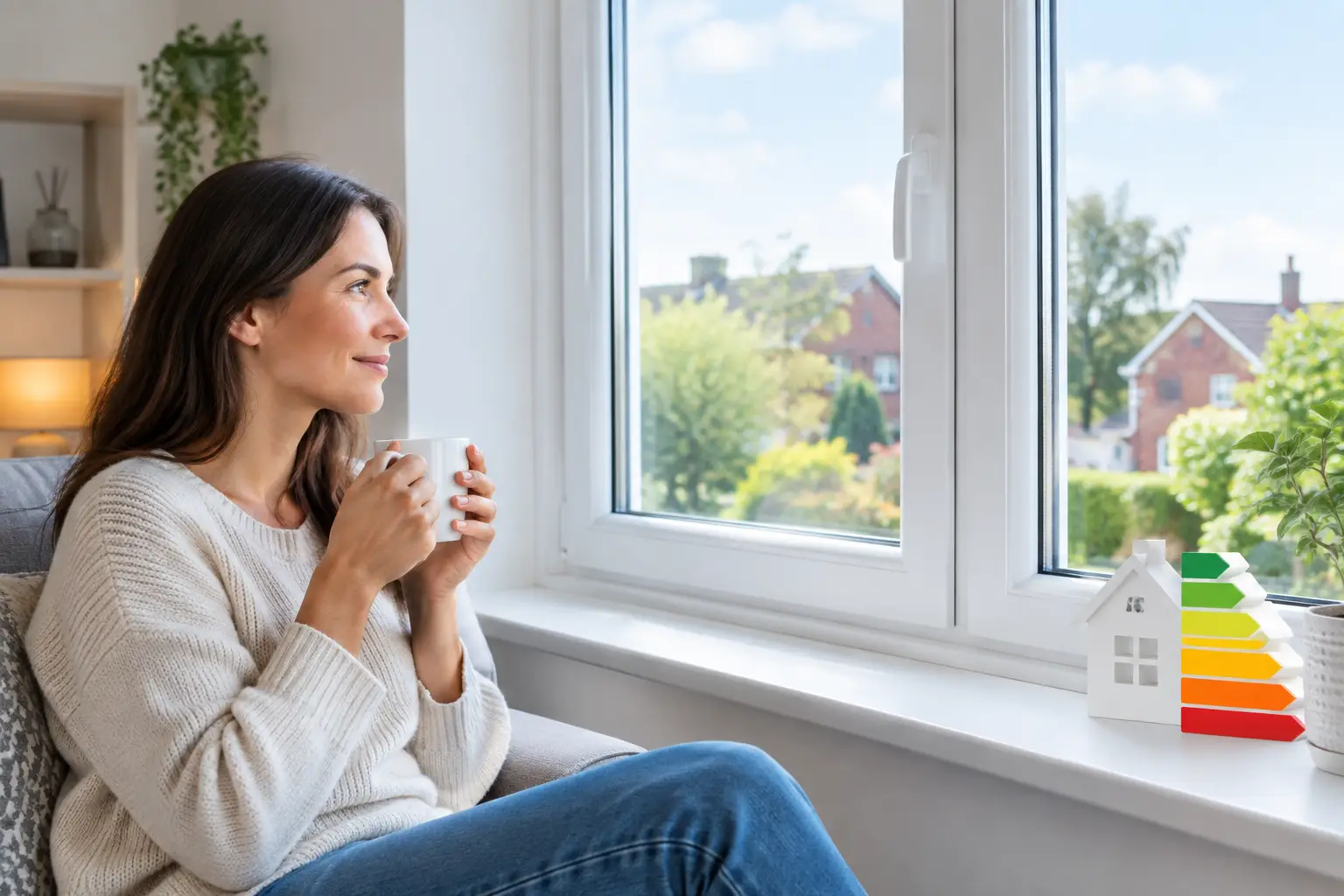
A cold draught around a window is easy to notice. The heat lost through poorly performing glazing is less obvious, but it can make rooms harder to warm and leave the heating working longer than it should. So, how energy efficient are uPVC windows? When they are properly specified and professionally fitted, modern A-rated uPVC windows can make a meaningful difference to comfort, heat loss and household energy use.
The important point is that not every uPVC window performs the same. The frame, glass, seals, size of the opening and quality of installation all affect the finished result. A good window is a complete system, not simply a pane of double glazing in a plastic frame.
How energy efficient are uPVC windows in practice?
Modern uPVC windows are among the most energy-efficient window options available for many UK homes. uPVC does not conduct heat as readily as aluminium, and a quality multi-chambered frame helps reduce the route by which warmth can escape through the window surround.
Combined with sealed double glazing, low-emissivity glass and gas-filled units, an A-rated uPVC window can retain far more heat than older single glazing, tired timber windows or early double-glazed units. It also helps reduce cold spots close to the glass, making living rooms, bedrooms and home offices more comfortable during colder months.
Energy efficiency should not be judged by the frame alone. A window rating considers the performance of the whole unit, including the glazing and frame. This matters because a very efficient glass unit can still be let down by a poor frame, weak seals or gaps around the installation.
For most replacement projects, high-quality A-rated double glazing is an excellent balance of thermal performance, cost, appearance and practicality. Triple glazing can provide further improvements in some properties, but it is not automatically the right choice for every home.
Understanding window ratings and U-values
When comparing replacement windows, two terms are particularly useful: Window Energy Ratings and U-values.
A Window Energy Rating gives an overall indication of how a window performs. Ratings commonly run from G up to A, with A+ and above available on some products. The rating takes account of heat loss, air leakage and useful solar gain through the glass. An A-rated window is designed to reduce heat loss while still allowing beneficial daylight and some warmth from the sun into the property.
A U-value measures how quickly heat passes through a material or complete window. The lower the U-value, the better the insulation. It is worth asking whether the figure quoted applies to the glass only or to the entire installed window. Whole-window values are more useful, as they account for the frame and glazed unit together.
There is no single number that tells the whole story. South-facing windows, for example, may gain useful warmth on bright winter days, while a shaded north-facing elevation has different demands. The best specification should suit the property, its orientation and the rooms being upgraded.
What makes an A-rated uPVC window efficient?
Several details work together. Low-emissivity, or low-E, glass has a near-invisible coating that reflects warmth back into the room while allowing daylight through. The space between glass panes is usually filled with an insulating gas, such as argon, rather than ordinary air. Warm-edge spacer bars around the perimeter of the unit reduce heat transfer at the edge of the glass, where condensation is more likely to form.
The uPVC frame also matters. Quality frames contain internal chambers that improve insulation, while well-made gaskets create a dependable seal when the window is closed. Reinforcement, locking mechanisms and hinges must be correctly fitted so the sash closes evenly and remains weather-tight over time.
These parts may not be visible once the windows are installed, but they are central to long-term performance. A window that looks smart on day one but does not close tightly after a few winters will not deliver the energy savings expected from it.
Double glazing or triple glazing?
For many homes across Kent and the South East, A-rated double-glazed uPVC windows provide very strong thermal performance. They are lighter than triple-glazed units, generally cost less and suit a wide range of existing openings and property styles.
Triple glazing adds a third pane and an additional insulating gap. This can lower U-values further and may be worth considering for particularly exposed properties, very cold rooms, new extensions or homeowners aiming for the highest possible level of insulation. It can also help with outside noise in the right specification.
However, triple glazing is heavier and more expensive, and the improvement will vary by property. In some situations, upgrading old windows to high-quality A-rated double glazing, improving draught sealing and insulating other weak areas of the building delivers better value. A sensible survey should look at the house as a whole rather than treating triple glazing as a one-size-fits-all upgrade.
Installation is as important as the window
Even the best uPVC window will underperform if it is poorly installed. Small gaps between the frame and wall can allow draughts, moisture and noise to enter. Uneven fitting can affect how the sash operates, while inadequate sealing can leave the property vulnerable to heat loss around the edges of the opening.
Professional installation begins with accurate measuring and a careful assessment of the existing aperture. The old frames need to be removed without unnecessary damage to surrounding brickwork, render or internal finishes. The new window must then be level, securely fixed and sealed correctly inside and out.
At ADM Home Improvements, this attention to detail is part of providing a replacement window that performs as it should, rather than simply filling the opening. It is particularly valuable in older Maidstone and South East properties, where window reveals and existing walls are not always perfectly square.
Will energy-efficient windows stop condensation?
New uPVC windows can reduce condensation on the inner surface of the glass because the glass stays warmer than old single glazing. This is a real benefit, especially in bedrooms, kitchens and bathrooms.
They cannot remove all condensation from a home, though. Condensation forms when warm, moisture-laden indoor air meets a cold surface. Everyday activities such as cooking, showering, drying clothes and even sleeping add moisture to the air. If ventilation is limited, that moisture may still settle on colder surfaces elsewhere in the room.
Trickle vents, extractors in kitchens and bathrooms, and sensible background ventilation all have a role. Keeping vents open where appropriate may feel counterintuitive in winter, but controlled ventilation helps manage moisture and protects indoor air quality. The aim is not to make a house draughty, but to balance warmth with fresh air.
Other benefits worth considering
Energy efficiency is often the main reason for replacing windows, but it is rarely the only one. Modern uPVC windows can improve security through multi-point locking systems and toughened or laminated glass where required. They also reduce outside noise when specified and fitted well, which can be valuable near busy roads or in built-up areas.
Maintenance is another practical advantage. uPVC does not need regular painting or staining, and routine cleaning of the frames, drainage channels and seals helps keep the windows looking good and operating properly. Colour and finish options also mean homeowners are not limited to plain white frames if a more traditional or contemporary appearance is preferred.
Getting the right result for your home
The best replacement windows are not necessarily the most expensive ones on paper. They are the windows with an appropriate energy rating, quality glazing, secure hardware and a frame style that suits the property, all fitted with care.
If your current windows feel cold, show misting between panes, let in draughts or are difficult to close, it is worth arranging a straightforward assessment. A well-planned uPVC window upgrade should leave your home quieter, warmer and more comfortable to live in, without making the process feel complicated.