
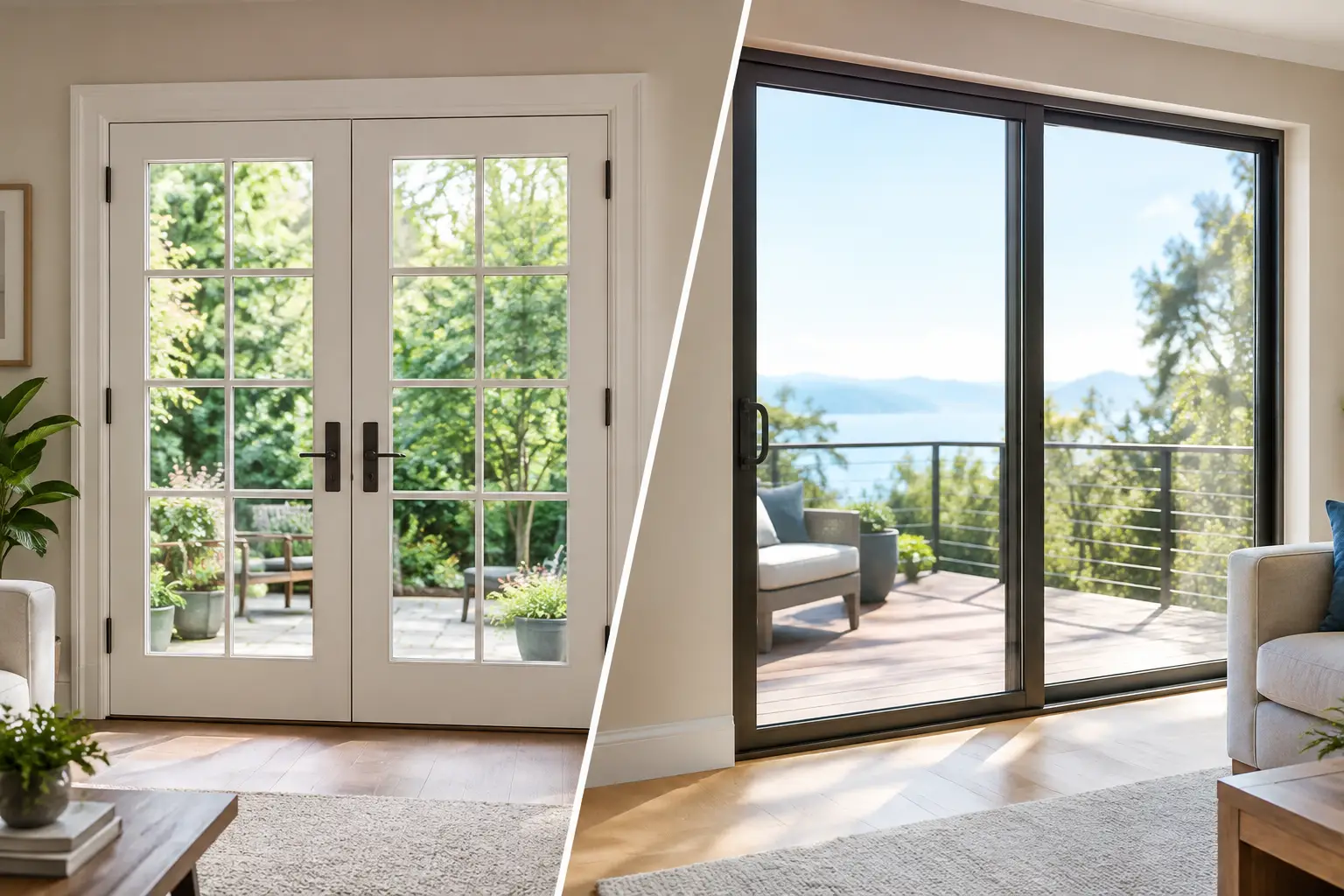
A new rear door can change far more than the view of the garden. It affects how a kitchen extension is used, where furniture can go, how easily children and guests move outside, and how much daylight reaches the room. When comparing French doors versus sliding doors, the better choice is usually the one that suits the opening, the layout and how your household actually lives.
Both options can provide secure, energy-efficient access to a patio, garden or conservatory. The practical differences are in the way they open, the amount of clear access they create and the look they bring to the property.
French doors versus sliding doors: the main difference
French doors are a pair of hinged doors that open from the centre. One door can be used for everyday access, while opening both leaves a wide, unobstructed route outside. They work particularly well where homeowners want a traditional appearance and the feeling of the house opening out into the garden.
Sliding patio doors run sideways along a track. One panel slides behind the other, so there is no door leaf swinging into the room or across the patio. Their larger glass panels and slimmer meeting lines can make them an excellent fit for modern extensions, kitchens and rooms where a strong view of the garden is the priority.
Neither style is automatically best. A well-chosen and correctly fitted door will perform better than a door selected only because it is currently fashionable.
Consider the space on both sides of the opening
The first question is often the most practical: where will the doors go when they are open?
French doors need clear space for their opening arc. If they open inwards, they can affect the position of a dining table, kitchen island or sofa. If they open outwards, they need a patio that will not be blocked by pots, seating or a raised step. Outward opening doors are often useful in compact rooms because they keep the interior floor area clear, but they still need careful planning outdoors.
Sliding doors are the more straightforward option where space is limited. Because the panels move parallel with the wall, they do not intrude into the room or garden. This can be especially helpful in a narrow kitchen-diner or where the patio immediately outside the door is used for a table and chairs.
There is one trade-off. With a standard two-panel sliding door, only around half of the overall opening is available for passage at one time. French doors can generally open across almost the full width. For homeowners who regularly carry garden furniture through, want easier access for a wheelchair or pram, or simply enjoy a wide opening in summer, that difference matters.
Daylight, views and the feel of the room
Sliding doors are often chosen for their glass. Their broad panes can bring in generous daylight and give an uninterrupted view over the garden, which is particularly valuable in a rear extension or conservatory. If the garden is a key part of the outlook, the reduced visual interruption of a sliding door can make a room feel more connected to it, even when the door is closed.
French doors have more visible framing, particularly where the two doors meet. That does not mean they make a room dark. Glazed French doors can still bring in plenty of natural light, and their proportions can look more at home on period properties, cottages and traditional family houses.
The surrounding windows should also be considered. A sliding door can create a clean, contemporary run of glass alongside modern uPVC windows. French doors can complement more classic elevations, especially when matched carefully in colour, handles and glazing style. A consistent finish usually makes the improvement feel like part of the home rather than an isolated replacement.
Everyday access to the garden
For quick trips to the washing line, bin store or patio, both styles are easy to use. French doors offer flexibility: use one leaf as a normal door on most days, then open both when entertaining or moving larger items outside. This is one reason they remain a popular choice for family homes.
Sliding doors give a very different kind of convenience. They can be left partially open for ventilation without a door projecting into a walkway. They are also a sensible option where the garden path runs close to the house. A panel that slides back does not obstruct the route along the patio.
Threshold design deserves attention here. A low threshold can make access easier and reduce a trip point, but it must be specified and installed correctly to maintain weather performance. The level of the internal floor, external paving and drainage all need to work together. This is not a detail to leave until the end of a project.
Security, warmth and weather performance
Modern French and sliding doors can both offer strong performance when they are quality products, properly measured and professionally installed. Look beyond the style and ask about the whole system: reinforced frames, multipoint locking, secure hinges or anti-lift features, toughened safety glass where required, reliable seals and appropriate glazing.
French doors typically lock along the main opening leaf, with the second leaf secured by bolts at the top and bottom. The right hardware and accurate adjustment are essential so that the doors close firmly and operate smoothly. Sliding doors use dedicated locking systems and are designed to resist the panels being lifted from their tracks.
Energy efficiency is equally dependent on specification and fitting. A-rated uPVC doors with suitable double glazing, well-fitted seals and correctly finished reveals can help reduce draughts and improve comfort near the opening. Larger glazed areas are attractive, but glass selection, frame quality and exposure to wind all affect the final result.
For a particularly exposed rear elevation, it is worth discussing the location during the survey. Rain driven by prevailing winds, a sheltered overhang, the condition of the existing sill and the height of the patio can all influence the most suitable design and installation method.
Appearance and property style
French doors have a familiar, welcoming character. They suit homes where a central pair of doors looks balanced against the rear elevation, and they can create a lovely framed view of the garden. White uPVC remains a practical classic, while grey, black and wood-effect finishes can be considered where they complement the windows, roofline products and exterior details.
Sliding doors tend to feel more minimal. They are often selected for contemporary extensions, open-plan kitchen-diners and properties where homeowners want the glass to take centre stage. A wider opening can be divided into two, three or more panels depending on the system, but the more panels involved, the more frame lines will be visible.
It is helpful to view the door from inside as well as outside. The exterior may look excellent, but the internal sightlines, handle position and panel arrangement are what you will live with every day.
Installation and budget considerations
The right price is not simply the cost of the door unit. Removing the existing doors, preparing the opening, checking the lintel, making good internal plasterwork, finishing external trims and ensuring a weatherproof junction all contribute to a tidy, lasting installation.
French doors can be a cost-effective option for many standard openings, particularly where the existing opening requires little alteration. Sliding doors may cost more depending on size, glass specification and the chosen system, although the visual impact can be worthwhile in a larger extension. If widening an opening is being considered, structural work and Building Regulations requirements should be assessed before choosing either style.
A proper site survey prevents surprises. It confirms the available opening size, checks for level or drainage issues, and identifies whether the existing structure needs work before new doors are fitted. For homes in Maidstone and across the South East, this local, practical approach is often more useful than trying to decide from photographs alone.
Which door is right for you?
Choose French doors if you value a classic look, want the option to open nearly the full width, or prefer to use one narrow door for daily access. They are particularly well suited to traditional homes and gardens where there is enough room for the doors to swing freely.
Choose sliding doors if preserving floor and patio space is essential, a wide garden view is high on the list, or your room has a more contemporary design. They are an excellent choice for a compact layout as well as a large glazed extension, provided the available opening width and panel layout give you enough practical access.
Before making a final decision, stand in the room and picture the everyday moments: carrying dinner outside, opening up for a family gathering, moving a pushchair through the doorway, or sitting indoors on a wet February afternoon. The best door should work well in each of those moments, not just look good on the day it is fitted.
A friendly survey and clear quotation can turn the choice into a much simpler one. An experienced installer can assess the opening, talk through finishes and security options, and help you choose doors that feel right for your home for years to come.