
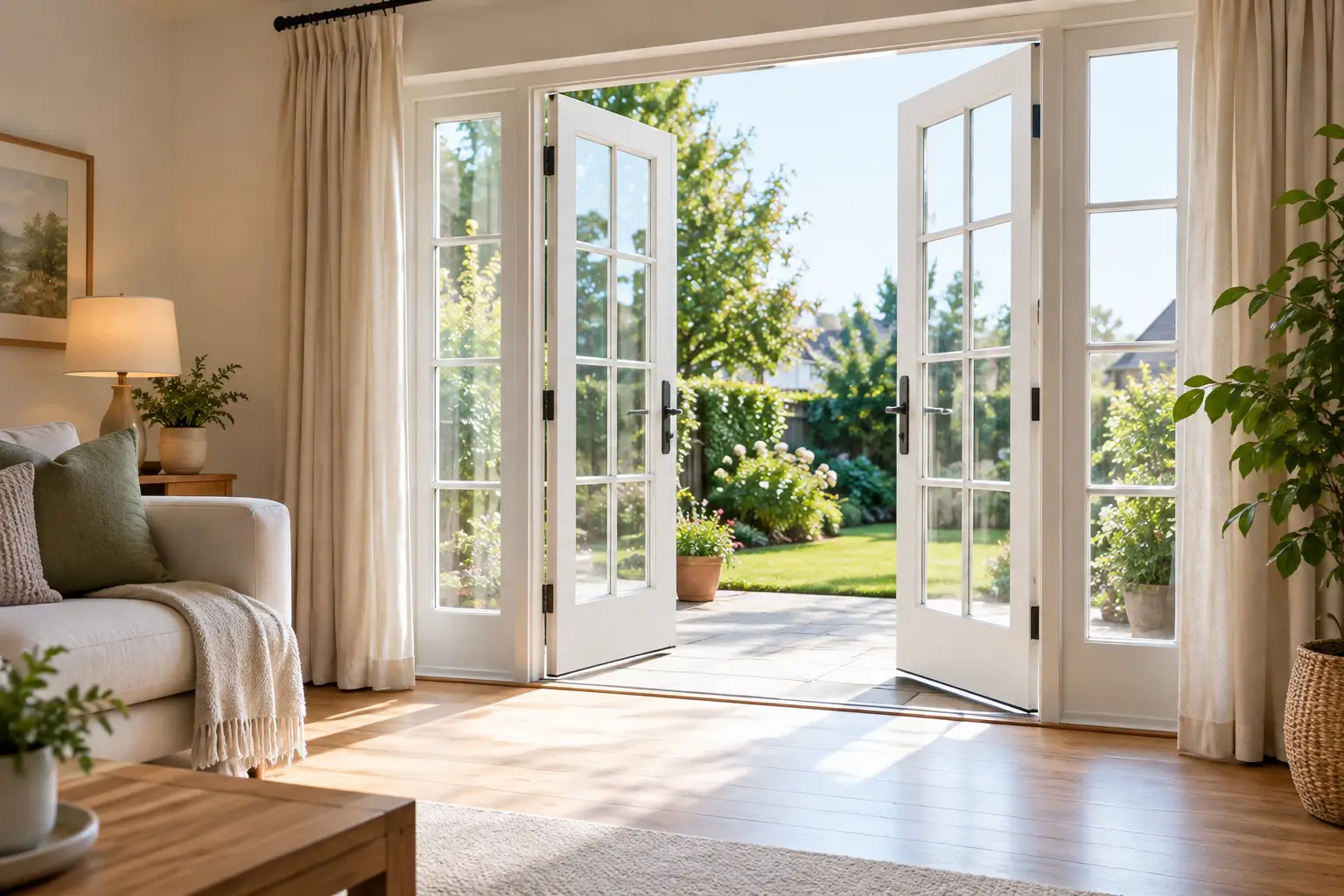
A rear door has a demanding job. It needs to bring in daylight, connect the house to the garden, keep out the weather and feel secure when the family is away. French doors meet that brief particularly well, offering a wide, practical opening without changing the character of a traditional home or a newer extension.
For homes across Maidstone and the South East, they are often a sensible alternative to a single back door, a sliding patio door or a larger bifolding system. The best choice comes down to the opening available, how you use the space and the level of insulation, security and finish you expect from the installation.
Why choose French doors?
French doors are a pair of glazed doors that meet in the middle and open outwards or inwards. When both leaves are open, there is no fixed central post in the way. That makes a real difference when moving garden furniture, a pram or larger items through the house, and it creates an inviting route between a kitchen, dining area or conservatory and the patio.
The glazed design also brings more natural light into rooms that can otherwise feel enclosed. This is particularly valuable in older properties where the rear elevation may have a smaller existing opening. With the right frame colour and sightlines, French doors can look equally at home beside a period brick wall, within a modern extension or as part of a conservatory upgrade.
They are not always the answer for every property. If the available opening is very wide and you want a largely uninterrupted view, sliding patio doors may suit better. If you are creating a full-width opening to a new extension, bifolding doors can provide a more dramatic result. French doors remain a strong option where a generous opening, classic appearance and everyday practicality matter more than covering an entire wall with glass.
Choosing the right French door layout
The position of the doors should guide the specification from the start. Outward-opening doors usually preserve more internal floor space, which is useful in kitchens and smaller dining rooms. They do, however, need a clear patio or path outside. Inward-opening doors can be preferable where external space is limited, provided the door leaves will not obstruct furniture or a busy route through the room.
It is also worth considering which leaf will be used most often. One door can act as the everyday access door, while the second opens when you need the full width. A well-planned handle position and opening direction make this feel natural rather than inconvenient.
Match the frame to the property
A-rated uPVC French doors are a popular choice because they are low maintenance, thermally efficient and available in a wide range of finishes. White remains a clean, cost-effective option, while anthracite grey, black and realistic woodgrain effects can better complement contemporary or traditional schemes.
The frame should be proportionate to the opening. Slimmer-looking profiles can maximise the glazed area, but the system must still provide the strength required for the door size and glazing unit. A careful survey is the point at which these details are checked properly, rather than simply selecting a style from a brochure.
Think beyond the doors themselves
The threshold deserves attention. A low threshold can make access easier for children, pushchairs and anyone with limited mobility, while a weathered threshold may be more appropriate where exposure to wind-driven rain is a concern. The surrounding patio level and drainage should be assessed too. A new door will only perform as intended if rainwater is directed away from the property.
Side panels or toplights can be useful where the existing opening is taller or wider than the door set. They can introduce extra light without requiring an unnecessarily oversized pair of doors. In some homes, they also create a more balanced appearance from both inside and out.
Glazing, warmth and ventilation
Glass accounts for much of the visible area, so it has a major effect on comfort. Modern double glazing helps reduce heat loss and can make a noticeable difference to a cold dining room or conservatory entrance. Where the location is exposed, or where sound from a road is an issue, an installer can advise whether upgraded glazing is worthwhile.
Privacy is another consideration. Clear glass works well when the garden is private, but obscured, patterned or decorative glazing may suit properties overlooked by neighbours. It is better to decide this before manufacture than to rely on blinds as the only solution afterwards.
French doors can also improve day-to-day ventilation. Opening one leaf allows a controlled flow of fresh air, while opening both can quickly clear cooking smells or warm air from a sun-facing room. This benefit depends on the layout of the home, of course. In a windy garden, door restrictors can help prevent the leaves from catching unexpectedly.
Security should be built into the specification
A garden-facing door should never be treated as a weaker point in the home. Quality French doors should include multi-point locking, secure hinges and durable handles with suitable cylinder protection. Toughened safety glass is normally used where required, particularly in lower-level glazed areas, giving added reassurance around a frequently used entrance.
Security is not just about the hardware. Accurate fitting is equally important. Doors need to be level, correctly packed and adjusted so that locks engage cleanly and weather seals make proper contact. A door that drops, sticks or leaves visible gaps will soon become frustrating and may compromise performance.
Ask how the doors will be finished internally and externally once fitted. Neat trims, properly sealed edges and a clean junction with the brickwork or render protect the installation and leave the opening looking complete. These are small details, but they are the details homeowners notice every day.
French doors, patio doors or bifolds?
Each option has a place. French doors provide a full clear opening through a relatively modest aperture and have a timeless, symmetrical look. They work particularly well for standard rear openings, conservatories and side access to a garden.
Sliding patio doors are often better where space around the doors is tight, because the panels move along a track rather than swinging into the room or garden. They can also offer broader panes of glass and an excellent view, although one section remains fixed when the doors are open.
Bifolding doors suit wider openings and homes where the goal is to open up an entire wall in warmer weather. They can be a striking addition to an extension, but they involve more panels, tracks and moving parts. For many households, a well-specified set of French doors delivers the access and light they need at a more measured scale.
A professional installation makes the difference
Before ordering, the existing opening should be measured carefully and checked for signs of movement, damp, failed lintels or damaged masonry. Replacing doors can reveal issues hidden behind old frames, especially in older Kent properties. Addressing them properly protects the new installation and avoids cosmetic shortcuts.
At ADM Home Improvements, French door installations are approached as part of the wider condition of the property, not simply as a frame swap. That means considering the threshold, surrounding finishes, drainage and how the new doors will work with your home from the first day of use.
The right doors should feel easy to live with: warm in winter, secure at night and a pleasure to open when the garden is calling. A free, no-obligation survey gives you the chance to discuss the practical details on site and choose a specification that suits your home rather than a one-size-fits-all solution.