
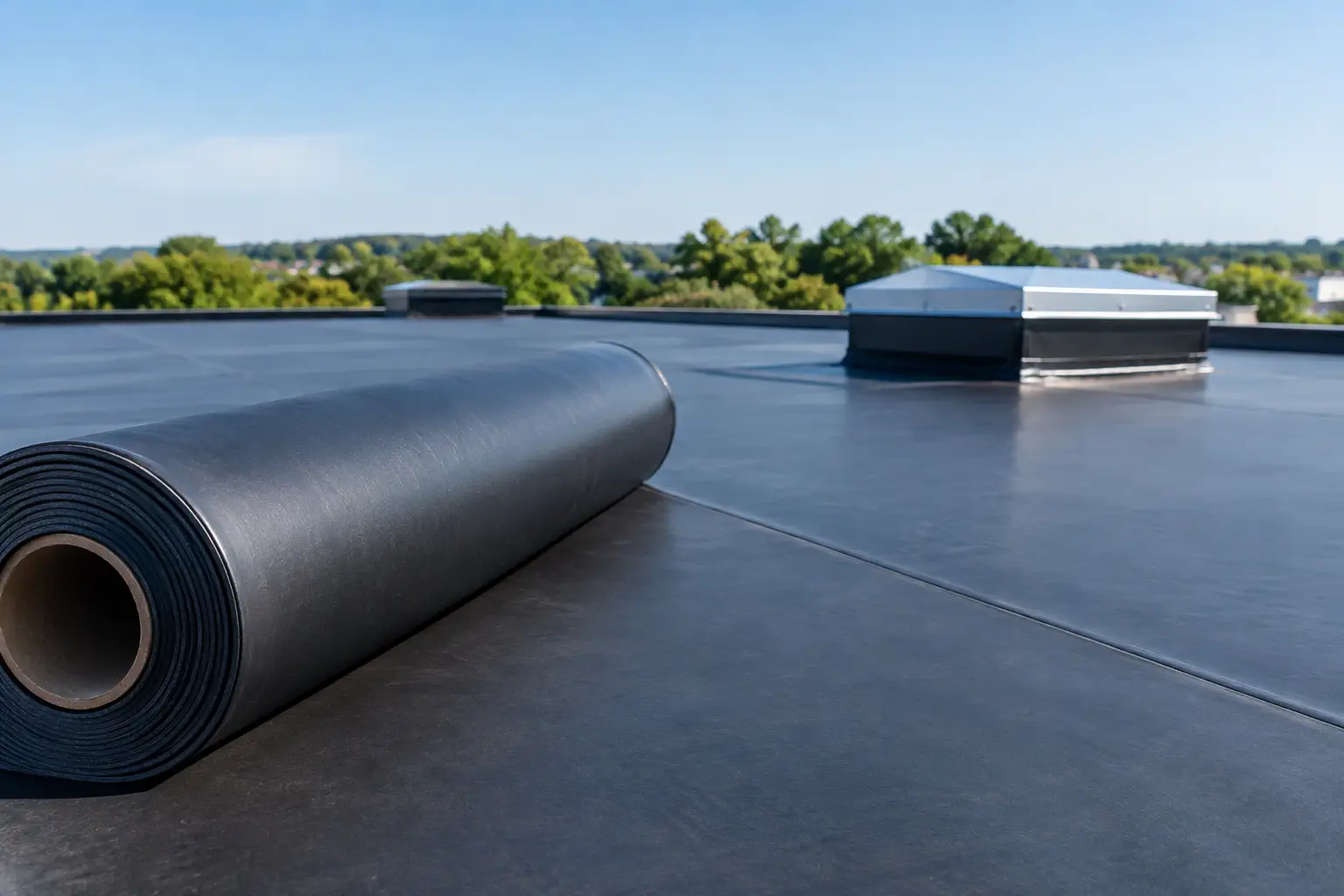
A flat roof should not be a recurring worry. Whether it sits over a garage, extension, porch or commercial area, it needs to deal with South East rain, summer heat and day-to-day exposure without letting water into the building below. A professionally fitted EPDM rubber roof lifespan is commonly 30 to 50 years, making it one of the most dependable long-term options for many flat-roof projects.
That range is not a promise that every roof will perform identically. The quality of the membrane, the condition of the deck, drainage, detailing and installation all matter. The good news is that EPDM is a proven material with a straightforward maintenance requirement, and a well-planned installation gives it every chance of reaching the upper end of its expected life.
What is the usual EPDM rubber roof lifespan?
EPDM stands for ethylene propylene diene monomer. In practical terms, it is a flexible synthetic rubber membrane designed for weatherproofing flat and low-pitched roofs. It is usually supplied in large sheets, allowing many domestic roofs to be covered with few or no seams.
For a quality EPDM system installed correctly, homeowners can reasonably expect around 30 to 50 years of service. Some roofs may last longer, particularly where they have good drainage, limited foot traffic and routine inspection. A lower-cost covering, poor preparation or a roof that regularly holds standing water will naturally have a shorter useful life.
This compares favourably with older felt systems, which can become brittle, crack or need more regular renewal. EPDM remains flexible through changing temperatures, helping it cope with movement in the roof structure over time. It is also resistant to ultraviolet light and ozone, both of which can gradually degrade less suitable materials.
Why installation has such a large effect on lifespan
The membrane itself is only one part of a successful flat roof. Water finds the smallest weakness, so the details around the edges and roof penetrations are just as important as the main surface.
A lasting EPDM roof starts with a sound, dry deck. Any rotten timber, loose boards or uneven areas should be addressed before the membrane is fitted. Installing a new covering over a failing base may save time initially, but it can lead to movement, trapped moisture and premature problems.
Professional fitting also means using the correct adhesive system and allowing for the particular roof design. Perimeters need secure mechanical fixing where required, while outlets, pipe penetrations, upstands and adjoining walls need careful sealing. These are the places most likely to cause leaks when workmanship has been rushed.
Drainage deserves the same attention. A flat roof is not always completely level, but it should be designed to direct water towards an outlet or gutter. EPDM can tolerate occasional rainwater better than many coverings, yet persistent ponding puts any roof under unnecessary strain and may indicate a fall or drainage issue that needs correcting.
Conditions that can shorten an EPDM roof's life
EPDM is hard-wearing, but it is not indestructible. Understanding the common causes of damage helps homeowners act before a minor issue becomes an internal leak.
Physical damage and unnecessary foot traffic
A roof used only for weather protection will generally last longer than one regularly walked on. Sharp tools, ladders, furniture legs and careless access by other trades can puncture or scuff the membrane. If regular access is needed for solar equipment, air-conditioning units or maintenance, designated walkway pads may be sensible.
Falling branches can also damage a roof, particularly during storms. Keeping nearby trees suitably trimmed reduces this risk and stops leaves building up around outlets.
Blocked gutters and outlets
Water needs a clear route off the roof. Moss, leaves and silt can block gutters, hoppers and internal outlets, causing water to back up at roof edges. In winter, repeated freezing and thawing can make the situation worse.
Checking drainage after autumn and after severe weather is a simple task that can protect the roof, fascias, soffits and the walls below. If gutters are difficult to reach safely, it is better to arrange maintenance than to take risks with ladders.
Poor alterations or incompatible products
Later additions are a frequent source of flat-roof issues. A new vent, satellite cable or fixing should never simply be pushed through the membrane and covered with sealant. It needs a proper weatherproof detail appropriate for EPDM.
Likewise, avoid applying unspecified coatings, solvents or cleaning chemicals. EPDM normally does not need a coating to perform, and an unsuitable product can affect the surface or make future repairs more difficult.
How to help an EPDM roof last longer
EPDM's appeal is that it does not demand intensive upkeep. It does, however, benefit from a little regular attention. An annual visual check, ideally in spring or autumn, is usually enough for most domestic roofs.
Look from ground level where possible for obvious debris, damaged flashing, lifted edge trims or overflowing gutters. If it is safe and necessary to inspect the roof more closely, check for pooled water that remains several days after rainfall, signs of impact damage and loose details around pipes or walls. Do not use sharp implements to remove debris, and do not walk on the membrane in icy conditions.
If you spot a small tear, puncture or split seam, arrange an assessment promptly. EPDM can often be repaired successfully with compatible materials, particularly when the affected area is localised. Waiting for a stain to appear on the ceiling can allow water to affect insulation, timber and plasterboard, turning a manageable repair into a larger job.
It is also worth considering the roof as part of the wider exterior envelope. Sound fascias, soffits, guttering and edge trims help manage rainwater and give the roof a neat, protected finish. When these elements are renewed together, the result is often more durable as well as more attractive.
Is EPDM right for every flat roof?
EPDM suits a wide range of applications, including garage roofs, extensions, porches, dormers and garden rooms. Its clean appearance, flexibility and long expected lifespan make it particularly suitable for homeowners who want a practical, low-maintenance finish rather than a short-term patch.
There are occasions when another system may be better. A roof with extensive foot traffic, a complex commercial specification, unusual fire requirements or a planned green roof may need a different build-up or additional protection. The existing structure also matters. A survey should establish whether the deck, insulation, falls and drainage meet the needs of the proposed roof rather than assuming a new membrane alone will solve every issue.
The cost should be considered over the full life of the roof, not just on installation day. A cheap covering that needs attention after a few years can prove more expensive and disruptive than a properly installed EPDM system designed to serve the property for decades.
Questions homeowners often ask
Can EPDM be installed over an existing felt roof?
Sometimes, but only if the existing roof is dry, stable and suitable as a base. In many cases, removing failed coverings gives a clearer view of the deck and allows defects to be corrected properly. A contractor should inspect the roof before recommending the best approach.
Does EPDM crack in cold weather?
One of EPDM's strengths is its flexibility across a broad range of temperatures. It is far less prone to becoming brittle in cold conditions than some older roofing materials. Damage in winter is more likely to result from impact, poor detailing or trapped water than from the rubber simply cracking.
Can a leaking EPDM roof be repaired?
Yes, local damage can often be repaired using compatible EPDM patches and adhesives. The key is identifying the actual source of the leak, which may be at an edge, outlet, wall junction or penetration rather than directly above the visible damp mark indoors.
For homeowners in Maidstone and across the South East, choosing a family-run team with experience in both roofing and exterior improvements can make the process simpler. ADM Home Improvements can assess the roof as a whole, explain the practical options clearly and carry out work with the attention to detail a long-lasting installation requires.
A flat roof is easiest to look after when it has been fitted properly from the start. Give it clear drainage, sensible access and an occasional inspection, and EPDM can remain a quiet, reliable part of your property for many years.