
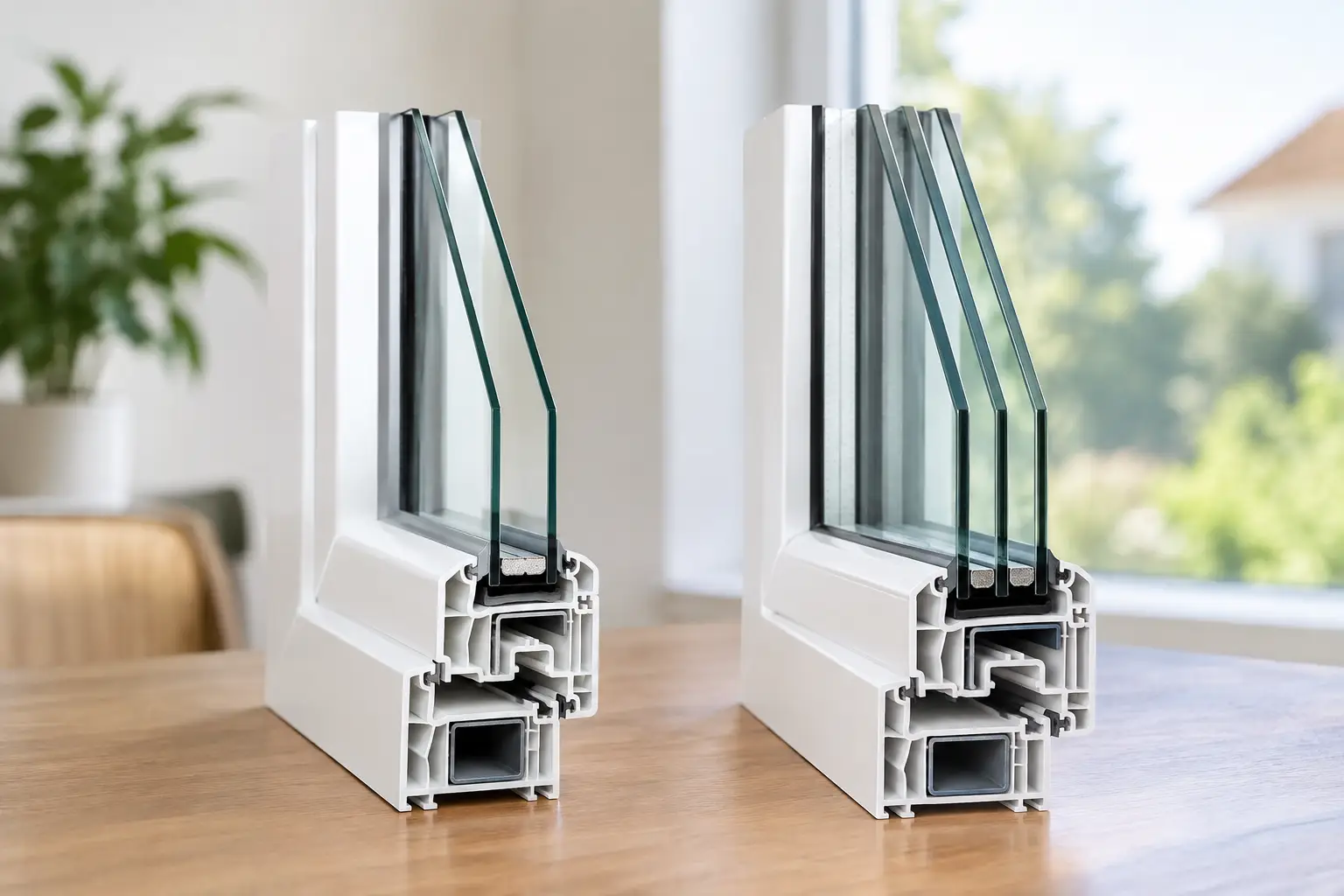
A window replacement should make a noticeable difference when the weather turns cold, not simply look smart from the kerb. When weighing up double glazing versus triple glazing, the right choice depends on your property, the position of the rooms and what you want the new windows to achieve. Triple glazing can offer excellent thermal performance, but it is not automatically the best value for every home in Kent.
For many homeowners, a well-specified A-rated uPVC double-glazed window provides a major improvement in warmth, security and appearance. For others, particularly those improving an extension, a newer build or an exposed room, triple glazing can provide an extra level of comfort. The detail behind the glass matters just as much as the number of panes.
Double glazing versus triple glazing at a glance
Double-glazed units contain two panes of glass separated by a sealed gap, usually filled with air or an insulating gas. Triple-glazed units use three panes and two sealed gaps. That additional pane and gap reduce the amount of heat that can pass through the unit.
In straightforward terms, triple glazing usually achieves a lower U-value than double glazing. A lower U-value means less heat loss. However, windows are not judged by the glass alone. The frame, spacer bars, seals, opening sections and quality of installation all affect the finished performance.
A high-quality double-glazed window installed carefully into a sound opening can therefore perform better in day-to-day use than a poorly chosen or poorly fitted triple-glazed alternative. This is why it pays to compare complete window specifications rather than relying on a headline claim.
When double glazing is the sensible choice
For most replacement projects, modern A-rated double glazing offers a strong balance of cost, thermal efficiency, light transmission and practicality. It is a substantial step up from old single glazing, tired frames or failed sealed units, and can make rooms feel less draughty and more consistent in temperature.
Double glazing is often particularly suitable where the aim is to replace windows throughout an established home without making unnecessary changes to the existing structure. The units are lighter than triple glazing, which can be useful for larger casements, upstairs windows and properties where frame dimensions need to remain proportionate.
It can also allow slightly more natural light into a room. The difference is not dramatic with every specification, but each extra pane reduces the amount of light and solar warmth passing through the glass. In a north-facing room that already feels a little dim, that balance is worth considering.
Cost is another practical factor. Double glazing generally costs less to manufacture and install, so it may allow a homeowner to replace more windows, improve a front door or address fascias, soffits and guttering within the same planned budget. Improving several weak points in the exterior envelope can be more valuable than spending the whole budget on one premium feature.
Where triple glazing earns its place
Triple glazing is designed for homeowners who want the highest possible thermal performance from their windows. The inner pane is warmer on a cold day, helping to reduce the cold surface effect that can make a room feel uncomfortable even when the heating is on.
It is a strong option for rooms with large areas of glazing, exposed elevations and spaces used for long periods, such as a home office, kitchen extension or lounge. It can also suit homeowners carrying out a wider refurbishment or extension, where insulation, roofing and glazing are being considered together rather than in isolation.
A triple-glazed unit is usually heavier and thicker. The uPVC frame, hinges, locks and installation method should be specified to handle that weight properly, particularly for opening sashes and larger windows. A professional survey should establish whether triple glazing is appropriate for each opening, rather than applying one solution to every room.
Triple glazing may also be worth considering when future comfort matters more than the shortest possible payback period. It can reduce heat loss further, but the extra initial cost is not always recovered quickly through energy savings alone. The benefit is often as much about a warmer-feeling, more stable room as it is about bills.
Noise reduction is not simply about three panes
It is easy to assume that triple glazing will always be quieter. In reality, sound reduction depends on the make-up of the glass, the size of the gaps between panes, the seals and the way the frame is fitted. Three identical panes can sometimes be less effective against certain traffic frequencies than a well-designed double-glazed acoustic unit.
If you live near a busy road, railway line, school or regular flight path, explain the type of noise you hear during the survey. A specification using different glass thicknesses, wider gaps or acoustic laminated glass may be more useful than adding a third pane alone. Airtight installation is equally important, as sound can travel through small gaps around a frame.
Warmth, sunlight and summer comfort
Windows need to manage more than winter heat loss. South- and west-facing rooms can gain useful free warmth from the sun during cooler months, while becoming uncomfortably hot in summer if the glazing and shading are not considered properly.
Because triple glazing can admit less solar energy, it is not always the automatic winner on a sunny elevation. The best option may vary across the house: triple glazing in a colder north-facing room or exposed extension, with carefully specified double glazing elsewhere. This approach should be based on the property rather than a one-size-fits-all rule.
For conservatories, roof lanterns and glass roofs, the specification becomes even more important. Solar control glass, ventilation and shading can have a greater influence on summer comfort than the choice between double and triple glazing alone.
Condensation: what new glazing can and cannot solve
New windows can reduce internal condensation by keeping the inner glass warmer, especially where old windows are single glazed or their sealed units have failed. Triple glazing can improve this further. But condensation is primarily caused by warm, moisture-laden air meeting a cold surface.
Cooking, showers, drying clothes indoors and limited ventilation all add moisture to the home. Even the best windows cannot remove that moisture by themselves. Background ventilation, extractor fans used properly and sensible heating habits remain important. If condensation is appearing on walls, ceilings or inside wardrobes, it may point to a wider ventilation or insulation issue rather than a window problem.
Do not overlook frames, fitting and security
The gap between an excellent and disappointing window installation is often in the details. A-rated uPVC frames, quality seals, secure locking systems and neat finishing all contribute to a window that works well for years. The perimeter around the frame must be properly prepared, fixed, insulated where appropriate and sealed to prevent draughts and water ingress.
This is particularly relevant in older properties around Maidstone and the wider South East, where openings may not be perfectly square and previous alterations can be hidden behind trims. An accurate survey allows the installer to identify these issues before fitting day and recommend a suitable solution.
Appearance matters too. Sightlines, frame colour, glazing bars and opening styles should complement the property. A technically efficient window that looks out of place is rarely a satisfying long-term improvement.
Which option should you choose?
Choose double glazing when you want an excellent all-round upgrade, good natural light and strong value across a typical replacement project. Choose triple glazing when the priority is maximum thermal comfort, the room is exposed or heavily glazed, or the wider build has been designed to a higher insulation standard.
There is no need to make the same decision for every window. A thoughtful specification can use each product where it makes most sense. At ADM Home Improvements, a proper survey focuses on the property, the room and the outcome you want, with clear advice rather than pressure to choose the most expensive option.
The most helpful next step is to view the glass and frame options in person and discuss how your rooms feel through winter and summer. That conversation will usually make the right level of glazing far clearer than a comparison table ever can.