
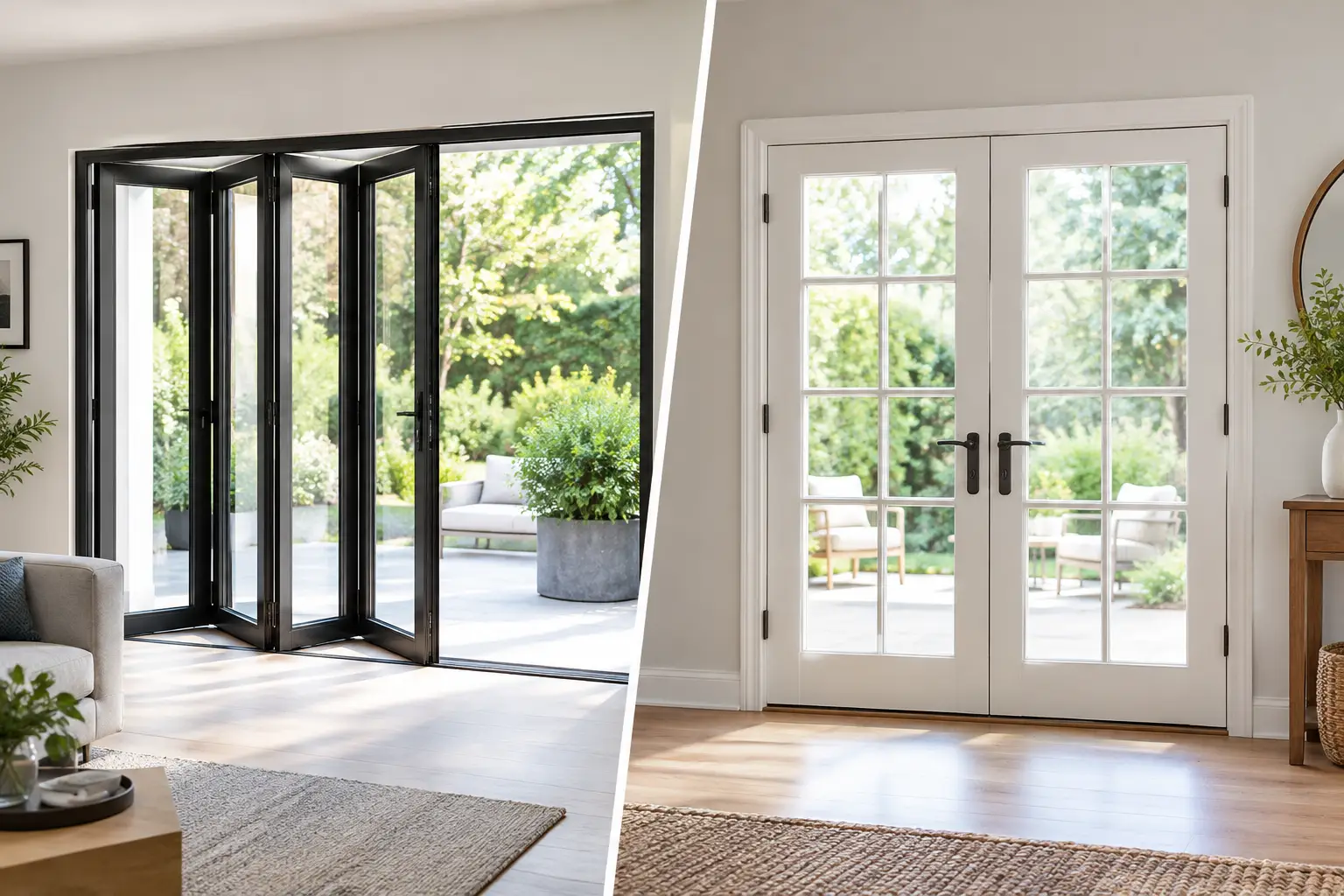
A new rear door can change far more than the view of the garden. It affects how a kitchen extension feels, how easily children and guests move outside, and how much natural light reaches the room. When considering bifold versus French doors, the right choice usually comes down to the size of the opening, how you use your home and the character you want to retain.
Both options can be secure, energy-efficient and made to suit your property. The best solution is not automatically the largest expanse of glass. It is the door that works properly every day, looks right from inside and out, and is installed with care around the surrounding structure.
Bifold versus French doors: the main difference
French doors are a pair of hinged doors that meet in the middle and open outwards or inwards. They offer a traditional appearance, a clear opening to the garden and a pleasingly simple way to connect two spaces. They are particularly popular for replacing existing rear doors, conservatories and smaller extensions.
Bifolding doors are made up of several glazed panels that fold and slide along a track, stacking neatly to one or both sides of the opening. They can span much wider openings than French doors and, when fully folded back, create a broad opening between the house and garden.
That difference shapes nearly every practical decision. French doors make a strong feature within a standard-sized opening. Bifolds are often chosen where a larger structural opening has been created as part of an extension, kitchen refurbishment or renovation.
How much opening do you need?
This is often the deciding factor. With French doors, both leaves can be opened to provide a generous route outside, although the frame and hinges remain at each side. For everyday use, many households open one leaf and leave the other secured, which is convenient for stepping out with washing, pets or a tray of drinks.
Bifolds can open up most of the full width of the aperture. This creates a more open-plan feel, particularly in summer, and is useful when hosting family gatherings or bringing large furniture in and out. A three-panel or four-panel set-up can suit a medium-sized extension, while larger installations can make a real feature of a wide rear elevation.
However, a full-width opening is not essential for every home. On a modest patio, a very wide bifold door can feel out of proportion. A well-positioned set of French doors, perhaps alongside fixed glazed panels, may provide plenty of daylight and a more balanced finish.
Think about daily access
Bifolds need to be folded back and secured when you want the full opening. That is worthwhile for entertaining and warm weather, but it may be more than is needed for a quick trip to the garden. Some homeowners choose a traffic door within the bifold arrangement, allowing one panel to operate like a conventional door.
French doors are straightforward. Open one door for regular use, or both when you need the space. There are fewer moving panels, which can appeal if you prefer a simple, familiar operation.
Light, views and the look of the room
Both door styles bring in natural light, especially when compared with a solid back door and small side window. Bifolds use multiple panels, so there are more vertical frame lines across the view when the doors are closed. Modern slim-frame designs reduce their visual impact, but they remain part of the appearance.
French doors have a central meeting point and a frame around each leaf. The view is less interrupted than a multi-panel bifold in many standard openings, particularly if the doors are paired with fixed side screens. Their proportions can work especially well on period homes, cottages and properties where a softer, more traditional style is preferred.
For a contemporary extension with a large garden-facing wall, bifolds can give the room a striking glazed feature. For a Victorian terrace, a family home with a conventional conservatory, or a smaller rear opening, French doors often look more natural. Colour also matters. White uPVC remains a practical choice, while grey, black and woodgrain finishes can be selected to complement windows, fascias and the wider exterior.
Space inside and outside the property
French doors need room for their leaves to swing. Outward-opening doors protect internal floor space and are common for rear doors, but they require a clear patio area. Inward-opening doors avoid this outside swing, although furniture inside the room must be planned around them.
Bifolds fold back to the side rather than swinging into the garden or room. This can be helpful near a dining table, narrow patio or garden path. Their stacked panels do take up space at one or both sides of the opening, so the layout still needs thought before installation.
Threshold choice is equally important. A low threshold can make the step between the house and patio easier to manage and can be particularly useful for young children, older relatives and anyone with mobility needs. The final detail must still provide suitable weather performance and drainage. An experienced installer will assess the floor levels, external paving and drainage rather than treating the door as an isolated product.
Security and energy efficiency
A quality uPVC French door and a quality bifold door can both provide strong security and good thermal performance. The specification matters more than the opening style alone. Look for multi-point locking, toughened safety glass where required, reliable hinges and hardware, and frames designed to reduce heat loss.
Glazing should be considered as part of the whole rear elevation. Large areas of glass can make a room brighter, but a south-facing extension may also gain considerable heat in summer. The right glass specification, ventilation and shading can make the space more comfortable throughout the year.
Bifolds have more panels, seals, hinges and running gear than French doors. This does not make them insecure or inefficient, but it does mean build quality, adjustment and installation are particularly important. Tracks must be level, panels correctly aligned and drainage details properly finished. French doors have a simpler design, yet they still need accurate fitting to prevent draughts, sticking and water ingress.
Cost and value: where the difference comes from
French doors are generally the more affordable option, especially where they are replacing an existing opening. They use fewer panels and less specialist hardware, and installation can be relatively straightforward when the surrounding wall and lintel do not need altering.
Bifolds normally cost more because of their size, glazing, hardware and fitting requirements. If a wider opening is needed, the budget may also need to allow for structural alterations, such as removing masonry and installing suitable support. This work should be planned properly, with the necessary structural advice and building regulations considerations addressed before the doors are ordered.
Value is not simply about the initial price. A well-made, correctly installed door should perform reliably for years and complement the property. Spending on a large bifold system makes sense where it transforms a new extension or creates the garden connection you genuinely want. Choosing French doors can be the better investment where they suit the opening perfectly and leave budget available for other improvements, such as windows, roofing or exterior finishes.
Which door is right for your property?
Choose French doors if you want a classic, versatile garden door, have a standard or modest-sized opening, or prefer straightforward everyday access. They are a strong choice for traditional properties and homeowners who want attractive glazing without making the rear elevation feel dominated by doors.
Choose bifolds if you are creating a wide opening, want to open an extension fully to the garden, or are aiming for a more contemporary, indoor-outdoor feel. They work best when the patio, flooring levels and furniture layout have been considered alongside the doors themselves.
For some homes, neither is the only answer. Patio doors can offer wide glazed views with a different operating style, while a fixed picture window beside French doors can bring extra light without adding more opening panels. Looking at the complete room, not just the door brochure, leads to a better decision.
A site visit and clear measurement are the sensible next steps. A family-run local team such as ADM Home Improvements can talk through the opening, the style of your home and the finish you want, then provide a free, no-obligation quotation based on what will work in practice. The most satisfying choice is the one that makes stepping into your garden feel easy every day.