
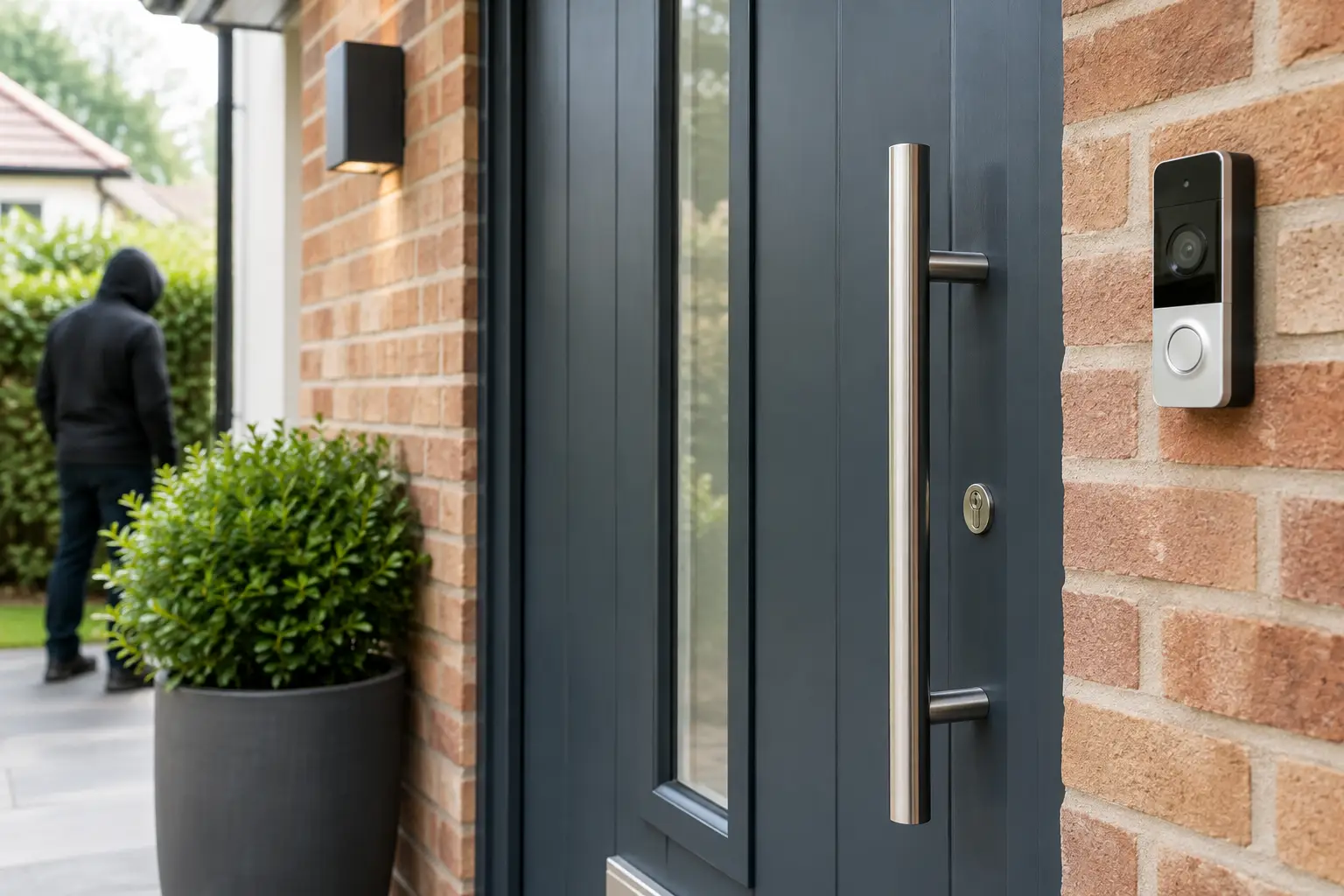
A front door should feel solid the moment it closes. If the letterbox rattles, the frame moves, or the lock feels light and loose, homeowners notice it - and so do opportunistic burglars. The best front door security features work together, combining a strong door slab, secure frame, quality lock, protected glazing and careful fitting rather than relying on one visible upgrade.
For homes across Maidstone, Kent and the wider South East, a replacement front door is often chosen for appearance and warmth first. Both matter, but security should be part of the decision from the beginning. A well-specified composite or uPVC door can improve kerb appeal, energy efficiency and day-to-day peace of mind without making the entrance feel overly industrial.
Start with a strong door and frame
The door itself is only as secure as the frame holding it. A quality composite front door is a popular option because it combines a dense, reinforced core with a durable outer skin. It has the weight and rigidity many homeowners want at their main entrance, while offering a wide choice of colours, glazing designs and traditional or contemporary styles.
Modern uPVC doors can also provide excellent security when they are made with reinforced profiles and fitted correctly. The important point is not simply the material. Ask how the door is reinforced, how the hinges and keeps are fixed into the frame, and whether the frame is securely anchored to the surrounding brickwork or structure.
A weak installation can undermine a good product. Gaps around the frame, loose fixings or poor alignment may affect both security and weather performance. The door should close cleanly, engage the locking points without force and sit evenly against its seals. This attention to detail is why experienced fitting matters as much as the specification on paper.
Multipoint locking is one of the best front door security features
A traditional single latch locks at one point. Most modern external doors use a multipoint locking system, which secures the door into the frame at several positions when the handle is lifted and the key is turned. Depending on the system, these may include hooks, bolts, rollers or mushroom cams.
Hooks are particularly useful because they engage behind the keeps in the frame, helping resist attempts to force the door open. Bolts add further resistance at the top and bottom, while a well-designed centre lock protects the most commonly attacked area around the handle and cylinder.
The number of locking points is not the only measure of quality. Five properly engineered and well-fitted points can be more useful than a higher number on a door that is poorly adjusted. What matters is that the locking points engage fully, the frame is strong enough to support them, and the system is matched to the door design.
Homeowners should also avoid leaving the key in the exterior-facing cylinder or relying on the latch alone when leaving the property. Lift the handle and turn the key to engage the whole locking mechanism every time.
Choose a protected lock cylinder
On many uPVC and composite doors, the cylinder is the small, removable part of the lock where the key is inserted. It is also an area worth specifying carefully. Standard cylinders vary considerably, and a basic cylinder can be more vulnerable to forced attack than a modern security-rated alternative.
An anti-snap cylinder is designed to break in a controlled way if attacked, helping protect the internal locking mechanism. For added reassurance, look for cylinders tested to the TS 007 security standard. A 3-star cylinder provides a high level of protection on its own; alternatively, a 1-star cylinder can be paired with 2-star security door furniture to achieve the same combined rating.
This is a detail often missed when a door is selected mainly by colour or style. The lock cylinder can usually be upgraded without changing the overall look of the door, making it a sensible consideration for replacement doors and for homes with older external doors.
Secure hinges and door furniture deserve attention
Hinges are easy to overlook, particularly on outward-opening doors. Security hinges, hinge bolts or dog bolts can help prevent the hinge side from being forced away from the frame. On an inward-opening front door, the hinges are generally inside the property, but they should still be well fixed, correctly adjusted and appropriate for the door weight.
The handle and backplate should be sturdy rather than decorative only. Security door furniture with a reinforced backplate helps shield the cylinder against drilling, snapping and pulling. It should sit tightly against the door, with no obvious movement when used.
A letterbox can also create a potential route to the internal thumbturn, keys or handle if it is positioned too close. A properly fitted internal letterbox guard can reduce this risk. Where a new door is being designed, consider the position of the letterbox, or whether post can be delivered another way. This is especially relevant if the property uses a thumbturn cylinder for quick exit in an emergency.
Do not treat glazed panels as a weak point by default
Glazing brings welcome natural light into a hallway, and it does not have to compromise security. The glass specification and its position are what count. Toughened safety glass is designed to break into small pieces, while laminated glass holds together when broken because it has an interlayer between panes. Laminated glass can offer more resistance to forced entry and may be particularly suitable for low-level or easily reached glazed sections.
For doors with decorative glass, ask what type of glass is being used and how it is secured within the door. Beading should be fitted on the inside where possible, so it cannot simply be removed from outside. If glass is close to the handle or lock, think carefully about whether a person could break a pane and reach through to operate the locking mechanism.
A solid door is not automatically the safer choice. A well-made glazed composite door with appropriate security glass, reinforced framing and a protected lock can be a very secure entrance, while making a dark hall much more welcoming.
Look for independently tested security standards
Security claims can sound similar, so independent testing gives homeowners a useful point of comparison. PAS 24 is a recognised UK standard that tests doors and windows against common methods of forced entry. A door that meets PAS 24 has been assessed as a complete set - not just as a leaf, lock or handle in isolation.
Products that meet Secured by Design requirements are also worth considering. Secured by Design is the police-backed initiative focused on designing out crime. These standards are particularly useful for new builds, rental properties and homeowners who want a clear benchmark when comparing different door systems.
Certification is valuable, but it should not replace common sense. Confirm that the door being fitted has the same specification as the tested product. Changing the lock, glazing, handle or side panel can affect the overall security arrangement, so it is worth discussing the final design before ordering.
Fit the door to the property, not just the brochure
A secure front entrance is about the entire opening. Older properties may have uneven brickwork, tired timber linings or previous alterations hidden behind trims. A careful survey should identify whether repairs or additional strengthening are needed before the new frame is installed.
For properties with a side panel, fanlight or adjoining window, these elements need the same level of thought as the main door. There is little benefit in fitting a high-security door if a lightweight adjacent panel can be forced more easily. Matching the glazing, frame strength and locking arrangement across the entrance creates a more balanced result.
Visibility also plays a part. A door viewer, suitable external lighting and a clear view of the approach can help residents see who is at the door before opening it. Video doorbells may be useful for some households, but they are an addition rather than a substitute for a well-built and properly locked door.
Everyday habits still matter
Even the best door cannot protect a home if it is left on the latch, the key is visible through the letterbox or spare keys are stored in an obvious hiding place. Make lifting and locking the handle part of leaving the house, even for a short trip. Keep keys out of sight and away from doors and windows, and check that children and visitors know how to lock the door correctly.
If a door has become difficult to lock, do not ignore it. Seasonal movement, worn hinges or a frame that needs adjustment can stop locking points from engaging as intended. Prompt maintenance is usually simpler than waiting for the problem to worsen.
For homeowners planning a replacement, the most useful conversation is not simply “which is the strongest door?” It is “which complete door set is right for this opening, this household and this property?” A friendly, detailed survey and a professionally fitted door will give you a front entrance that looks right, works properly and provides confidence every time you turn the key.